
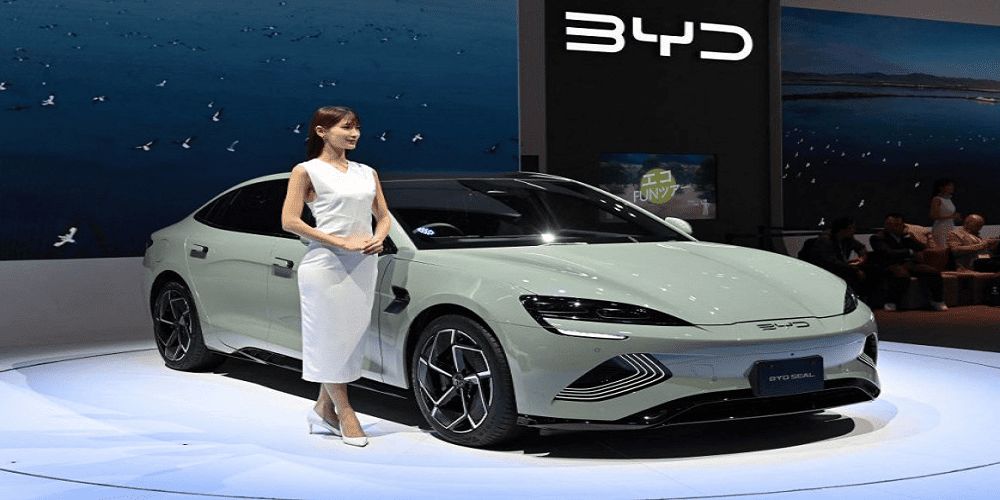
In recent years, electric vehicles (EVs) have gone from being a niche experiment to a worldwide phenomenon. Among the companies leading this global transition is BYD (Build Your Dreams), a Chinese automotive giant that has positioned itself as one of the largest EV manufacturers in the world. BYD electric vehicles are increasingly recognized not only for their affordability but also for their innovation, battery technology, and strong presence in multiple markets.
This guide dives deep into BYD’s electric vehicles, exploring their history, technology, models, global strategy, and what makes them a strong contender in the EV revolution.
1. The Rise of BYD in the Global EV Market
BYD was founded in 1995 as a rechargeable battery company and entered the automotive industry in 2003. Initially focused on gasoline cars, BYD pivoted to electric vehicles in response to the growing demand for sustainable mobility and government initiatives to reduce emissions in China.
Fast forward to 2025, BYD has become a dominant force in the EV industry, producing battery electric vehicles (BEVs) and plug-in hybrid electric vehicles (PHEVs) that rival Tesla and other global players. In 2023 and 2024, BYD consistently ranked among the top EV sellers worldwide, with its models being shipped to over 50 countries.
The company's strategy revolves around vertical integration — manufacturing its own batteries, electric drivetrains, and even semiconductor components — which gives BYD better cost control and the ability to innovate faster.
2. BYD’s EV Technology
A major reason for BYD’s success is its proprietary battery technology. Unlike many automakers that rely on external battery suppliers, BYD produces its own Blade Battery, which is a lithium iron phosphate (LFP) battery with a unique cell-to-pack design.
Blade Battery Advantages:
- Safety: LFP batteries are less prone to overheating and thermal runaway compared to nickel-based batteries.
- Longevity: They offer a longer cycle life, meaning they can be charged and discharged thousands of times with minimal degradation.
- Cost Efficiency: BYD’s vertical integration reduces battery costs, helping the company price its cars competitively.
- Environmental Benefits: LFP batteries do not use cobalt, which is associated with ethical and environmental issues in mining.
Additionally, BYD has developed its own e-Platform 3.0, an advanced electric vehicle architecture designed for efficiency, intelligence, and modularity. This platform supports over-the-air (OTA) updates, fast charging, and optimized weight distribution.
3. BYD Electric Vehicle Lineup
BYD offers a wide range of electric vehicles to suit different customer needs, from compact city cars to SUVs and luxury sedans. Below is an overview of BYD’s key EV models as of 2025:
3.1 BYD Dolphin
The Dolphin is a compact hatchback targeting urban commuters. Known for its affordability and efficiency, the Dolphin offers a practical range of 300-400 km per charge and a comfortable interior. It’s designed for first-time EV buyers looking for a budget-friendly option.
3.2 BYD Atto 3 (Yuan Plus in China)
This is a popular electric SUV available in multiple international markets, including Europe, Australia, and India. The Atto 3 combines sporty design with high efficiency, a spacious cabin, and advanced infotainment features.
3.3 BYD Seal
A direct competitor to the Tesla Model 3, the BYD Seal is a premium electric sedan with impressive range, performance, and technology. It features BYD’s e-Platform 3.0 and is praised for its smooth ride and elegant design.
3.4 BYD Tang
The Tang is a larger electric SUV, available as both a BEV and a PHEV. It offers three-row seating, making it ideal for families. The Tang is already popular in markets like Norway, where EV adoption rates are among the highest in the world.
3.5 BYD Han
This flagship sedan competes with luxury EVs like the Tesla Model S and Mercedes EQE. The Han combines luxury, performance, and cutting-edge technology, making it one of BYD’s most prestigious offerings.
4. BYD’s Global Expansion
While BYD initially focused on the Chinese domestic market, it has aggressively expanded internationally. The company now exports its EVs to Europe, Southeast Asia, India, Australia, South America, and Africa.
Some notable milestones include:
- Establishing assembly plants in Thailand, Brazil, and Hungary to cater to local demand.
- Entering European markets with strong offerings like the Atto 3, Dolphin, and Seal.
- Becoming a preferred supplier of electric buses in many countries, including the UK, Chile, and Colombia.
BYD’s strategy is to capture not only the passenger car market but also the commercial EV segment, which includes electric buses, trucks, and forklifts.
5. BYD vs. Competitors
When it comes to competition, Tesla is often considered BYD’s closest rival. While Tesla focuses on a premium image and cutting-edge autonomous driving features, BYD emphasizes affordability, scalability, and variety in its model lineup.
BYD also competes with other Chinese automakers like NIO, XPeng, and SAIC, as well as global giants like Volkswagen and Hyundai. Its cost leadership and strong battery technology give it an edge in price-sensitive markets.
6. Advantages of Choosing BYD Electric Vehicles
Consumers considering an EV have many reasons to choose BYD:
- Affordability: BYD EVs are often cheaper than Tesla and other premium brands without compromising quality.
- Safety: The Blade Battery’s design offers superior fire safety, making BYD cars a trusted choice.
- Variety: From compact hatchbacks to luxury sedans, BYD offers something for everyone.
- Range Options: BYD EVs provide competitive range figures, often between 300 and 700 km per charge.
- Low Maintenance: Like all EVs, BYD cars have fewer moving parts, reducing maintenance costs.
- Sustainability: BYD’s focus on LFP batteries reduces environmental impact and reliance on rare minerals.
7. Challenges Facing BYD
Despite its success, BYD faces some challenges:
- Brand Recognition: In some markets, BYD is still relatively unknown compared to established automakers.
- Charging Infrastructure: Growth in sales must be matched by charging network expansion, especially in developing countries.
- Competition: The EV market is becoming crowded with new entrants and aggressive pricing from rivals.
- Perceptions about Chinese Cars: Some customers are hesitant about quality and resale value of Chinese vehicles.
8. The Future of BYD Electric Vehicles
Looking ahead, BYD aims to strengthen its position as a leader in sustainable mobility. The company is investing heavily in solid-state battery research, autonomous driving technology, and AI-driven manufacturing.
Its goal is not just to sell cars but to become a full-spectrum clean energy company, producing energy storage solutions, solar panels, and electric mass-transit solutions.
By 2030, BYD plans to phase out internal combustion engine vehicles entirely, aligning with global climate goals.
FAQs on BYD Electric Vehicles
1. Are BYD electric cars available outside China?
Yes, BYD exports its vehicles to more than 50 countries, including India, Australia, several European nations, and parts of South America.
2. How long do BYD EV batteries last?
BYD’s Blade Battery is designed to last over 3000 charge cycles, which can translate to more than 10 years of typical usage.
3. How does BYD compare to Tesla?
Tesla focuses on premium performance EVs and autonomous tech, while BYD offers a wider range of affordable options and leads in battery technology production.
4. Are BYD EVs safe?
Yes, BYD EVs have undergone strict safety testing. The Blade Battery has passed the nail penetration test without catching fire, proving its safety.
5. Can BYD EVs use public charging networks?
Yes, BYD EVs are compatible with standard public charging infrastructure, including fast-charging networks in most markets where they are sold.
6. Does BYD make only cars?
No, BYD also produces electric buses, trucks, monorails, and even energy storage solutions, making it a diversified clean energy company.
7. What is the average price of a BYD EV?
Prices vary by model and region, but BYD EVs generally range from affordable entry-level vehicles starting around $20,000 to luxury sedans costing over $50,000.
8. Is BYD investing in autonomous driving?
Yes, BYD is working on advanced driver-assistance systems (ADAS) and has announced future plans for Level 3+ autonomous driving capabilities.
Leave A Comment
0 Comment