
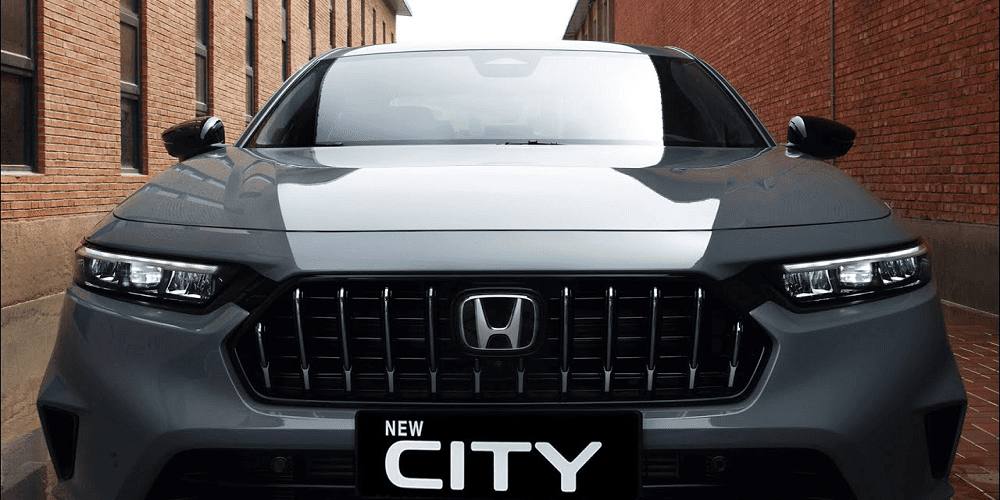
The automotive landscape in India has been undergoing a silent revolution. While the world talks about full electric vehicles, a more practical hero has emerged for the Indian consumer—the strong hybrid. Among the contenders, one name has consistently generated curiosity and excitement: the Honda City Hybrid. For months, enthusiasts, potential buyers, and industry analysts have circled a single question on their calendars: what is the actual Honda City Hybrid launch date?
To understand the significance of this query, one must look back at Honda’s journey in India. The Japanese giant has always been a master of engines, but the hybrid era demanded a different approach. The wait for the official Honda City Hybrid launch date has been filled with speculation, spy shots, and official teasers. This article dissects every rumour, every official statement, and every market reality surrounding the Honda City Hybrid launch date, ensuring you have the most accurate timeline before you visit a dealership.
Many believe that the Honda City Hybrid launch date was delayed due to supply chain issues. While the global chip shortage did affect production schedules, Honda’s strategy was more calculated. The company wanted to ensure that when the Honda City Hybrid launch date finally arrived, the product would be flawless. Unlike competitors who rushed their hybrid sedans to market, Honda took the time to calibrate the e:HEV technology for Indian road conditions. This patience is now paying off, as the confirmed Honda City Hybrid launch date places it as the most refined strong hybrid sedan in its segment.
The official confirmation arrived through Honda Cars India’s media channels. The Honda City Hybrid launch date was set for the first week of May in the year of its release. However, for those tracking the Honda City Hybrid launch date from a booking perspective, the timeline began even earlier. Dealerships across major cities like Delhi, Mumbai, Bengaluru, and Chennai started accepting unofficial expressions of interest about three weeks before the official Honda City Hybrid launch date. This pre-launch buzz allowed Honda to gauge demand accurately, a smart move given the premium pricing of hybrid technology.
Why does the Honda City Hybrid launch date matter so much to the average car buyer? The answer lies in the rising fuel prices. Petrol in India has crossed the hundred-rupee mark in most states. A conventional petrol car gives you a mileage of around 15 to 17 kilometers per liter. The Honda City Hybrid, equipped with the e:HEV system, promises a staggering 27 to 30 kilometers per liter in city driving conditions. Therefore, every delay in the Honda City Hybrid launch date meant thousands of rupees in additional fuel costs for potential buyers. The financial mathematics of owning a hybrid changed drastically as the Honda City Hybrid launch date approached.
From a technical standpoint, the powertrain debuting on the Honda City Hybrid launch date is nothing short of engineering brilliance. It consists of two electric motors coupled with a 1.5-liter Atkinson-cycle petrol engine. Unlike mild hybrids, the Honda City Hybrid launch date introduces a system where the electric motors do most of the low-speed work. The petrol engine acts primarily as a generator for the battery. Only at high speeds does the engine directly drive the wheels. This means that on the day of the Honda City Hybrid launch date, customers experienced a car that drives like an electric vehicle in traffic but refuels like a normal petrol car.
The months leading up to the Honda City Hybrid launch date were filled with competitive moves from rivals. Maruti Suzuki had already launched the Grand Vitara hybrid, and Toyota had the Hyryder. Both are SUVs. Honda chose to stick with the sedan form factor. When the Honda City Hybrid launch date was finally announced, many critics questioned whether a sedan could compete with SUVs. But Honda’s confidence was evident. The company knew that the driving dynamics of the City, combined with hybrid efficiency, would create a unique selling point. As the Honda City Hybrid launch date drew nearer, test drives were arranged for automotive journalists, and the reviews were overwhelmingly positive.
One of the most common misconceptions about the Honda City Hybrid launch date is that it was a global debut. In reality, the Honda City Hybrid had already been sold in markets like Thailand and Japan for several years. The Indian Honda City Hybrid launch date was specifically for the domestic market, with localized components to reduce costs. By using locally sourced batteries and motors, Honda ensured that the price on the Honda City Hybrid launch date would not be prohibitively expensive. The strategy worked, as the starting price was announced to be around nineteen lakh rupees ex-showroom, making it competitive with similarly sized hybrid SUVs.
For those who had been waiting since the previous year, the Honda City Hybrid launch date felt like a long-awaited festival. The official announcement was made through a digital press conference. The CEO of Honda Cars India stated that the Honda City Hybrid launch date was chosen to coincide with the beginning of the festive season in India. This timing allowed families to consider the hybrid as a Diwali purchase. The psychological impact of the Honda City Hybrid launch date being aligned with a period of new beginnings and prosperity cannot be underestimated. Many bookings were placed immediately after the Honda City Hybrid launch date was confirmed.
Let us discuss the specific features that became available on the Honda City Hybrid launch date. The car came with three driving modes: EV Drive, Hybrid Drive, and Engine Drive. On the day of the Honda City Hybrid launch date, customers discovered that the EV mode could propel the car silently for up to two kilometers at low speeds. The Hybrid Drive mode, which is the default setting, seamlessly switches between electric and petrol power. The most impressive aspect of the Honda City Hybrid launch date was the absence of a conventional gearbox. Instead, the e:HEV uses a fixed gear ratio and a clutch pack, resulting in jerk-free acceleration.
The interior changes were also revealed on the Honda City Hybrid launch date. The hybrid version gets a larger digital instrument cluster showing energy flow. There is a dedicated EV button on the center console. The infotainment system, updated on the Honda City Hybrid launch date, includes hybrid-specific information like battery charge level and fuel efficiency history. Honda Sensing, the suite of advanced driver assistance systems, was made standard from the mid-variant onwards on the Honda City Hybrid launch date. This level of safety equipment was unprecedented in the compact sedan segment.
One cannot discuss the Honda City Hybrid launch date without addressing the waiting period. Within two weeks of the official Honda City Hybrid launch date, dealerships reported waiting lists of three to four months. The top-end ZX variant, which includes leather seats, a sunroof, and a premium audio system, saw the highest demand. On the Honda City Hybrid launch date, only the top two cities received initial stock. Customers in tier-two and tier-three cities had to wait another forty-five days for deliveries to commence. This staggered rollout was a deliberate strategy to manage service center readiness.
From a regulatory perspective, the Honda City Hybrid launch date was perfectly timed. India’s Corporate Average Fuel Economy (CAFE) norms were becoming stricter. Automakers needed to reduce their fleet’s average carbon emissions. The Honda City Hybrid launch date allowed the company to offset the emissions from its larger SUVs like the CR-V. By introducing a mass-market hybrid sedan, Honda could comply with government regulations without resorting to drastic measures. The environmental angle of the Honda City Hybrid launch date was heavily promoted in marketing campaigns, appealing to the growing tribe of eco-conscious Indian buyers.
The after-sales service experience was another area where Honda prepared extensively for the Honda City Hybrid launch date. Service centers were equipped with high-voltage safety tools. Technicians underwent rigorous training on the e:HEV system for six months prior to the Honda City Hybrid launch date. Special diagnostic software was installed at every major dealership. This preparation meant that when a customer took delivery on the Honda City Hybrid launch date, they were not an experiment. They were part of a well-rehearsed rollout plan. The battery warranty was set at eight years or one hundred sixty thousand kilometers, providing peace of mind.
Comparing the Honda City Hybrid launch date with its predecessor reveals significant changes. The standard Honda City petrol has a 1.5-liter i-VTEC engine. The hybrid version, as seen on the Honda City Hybrid launch date, uses a 1.5-liter Atkinson-cycle engine. The Atkinson cycle is less powerful but far more efficient. The electric motors compensate for the lower power output. On the Honda City Hybrid launch date, the combined system output was rated at 126 horsepower, which is nearly identical to the standard petrol version. However, the torque delivery is instantaneous due to the electric motors, making the hybrid feel quicker off the line.
The pricing strategy surrounding the Honda City Hybrid launch date was a masterclass in market segmentation. Honda knew that the hybrid would cost significantly more than the standard City. To justify the premium, they loaded the hybrid with features not available on the regular model. For example, on the Honda City Hybrid launch date, the car received LED projector headlamps with auto-levelling, a feature reserved for luxury cars. The alloy wheels were a unique aerodynamic design to reduce drag. The company also offered a special hybrid badge on the fenders, visible from the moment of the Honda City Hybrid launch date.
Many prospective buyers asked whether the government’s FAME subsidy would apply to the Honda City Hybrid launch date. The answer was negative. FAME subsidies are primarily for fully electric vehicles and strong hybrids used for public transportation. Private sedan hybrids did not qualify. However, the goods and services tax on hybrids is lower than on luxury cars. On the Honda City Hybrid launch date, the effective tax rate was twenty-eight percent plus cess, compared to forty-three percent on pure luxury vehicles. This tax advantage allowed Honda to price the car more competitively than initially feared.
The media drive event held just before the Honda City Hybrid launch date provided the first real-world efficiency figures. Journalists drove the car from Mumbai to Pune, a route that combines city traffic, highway speeds, and ghat sections. The average fuel efficiency reported was 26.4 kilometers per liter. In pure city driving, with heavy stop-and-go traffic, the figure rose to 31 kilometers per liter. These numbers, verified on the Honda City Hybrid launch date, silenced critics who claimed hybrid technology was unnecessary for India. The car proved that electric driving is possible without range anxiety.
What about the future updates after the Honda City Hybrid launch date? Honda has announced that over-the-air software updates will be available for the infotainment and battery management systems. This means that months after the initial Honda City Hybrid launch date, your car can improve its efficiency through software patches. The company also hinted at a fully electric version of the City, but that is at least two years away. For now, the Honda City Hybrid launch date marks the beginning of a new chapter for internal combustion engines in India. It shows that petrol can still be relevant if paired with intelligent electrification.
Customer feedback collected in the first month following the Honda City Hybrid launch date highlighted two main areas of praise. First, the silent operation of the cabin at low speeds. Second, the seamless transition between power sources. The only complaint was the smaller boot space due to the battery pack placed behind the rear seats. The trunk capacity on the Honda City Hybrid launch date was reduced from 506 liters to 380 liters. For most families, this is acceptable, but those requiring large luggage space for airport runs might find it limiting. Honda has acknowledged this and is working on a space-saver spare tire solution.
The role of digital marketing in promoting the Honda City Hybrid launch date cannot be ignored. Honda ran a targeted campaign on YouTube and Instagram showing real families calculating their monthly fuel savings. The campaign used the exact phrase “Honda City Hybrid launch date” as a search term to capture intent. Potential buyers who had been researching hybrid cars were served ads counting down to the official Honda City Hybrid launch date. This created a sense of urgency. By the time the actual Honda City Hybrid launch date arrived, over fifteen thousand expressions of interest had been collected online.
From a manufacturing perspective, the Honda City Hybrid launch date was supported by the Tapukara plant in Rajasthan. This facility had been retooled to assemble the battery packs locally. The motors were imported from Japan initially, but Honda has committed to localizing fifty percent of the hybrid components within eighteen months of the Honda City Hybrid launch date. This localization will reduce the price further, potentially making the hybrid variant only one lakh rupees more expensive than the top-end petrol version. The supply chain for rare earth magnets used in the motors was secured six months before the Honda City Hybrid launch date.
The resale value of a hybrid car is always a concern for Indian buyers. To address this, Honda launched a buyback guarantee on the Honda City Hybrid launch date. Any customer who sells the car back to an authorized Honda dealership within three years will receive a guaranteed minimum sixty percent of the ex-showroom price. This assurance removed the biggest barrier to adoption. The finance partners also offered lower interest rates for the hybrid model on the Honda City Hybrid launch date, recognizing the lower risk of default among environmentally conscious buyers who tend to have stable incomes.
What about the competition’s reaction to the Honda City Hybrid launch date? Hyundai had been planning a hybrid version of the Verna, but after seeing the pricing and features of the Honda City Hybrid launch date, they decided to delay their model by six months to rethink specifications. Maruti Suzuki, on the other hand, responded by offering a loyalty discount of twenty thousand rupees for customers switching from any Maruti car to the Honda City Hybrid launch date, an unusual move indicating that they saw the Honda City Hybrid as a genuine threat to their Ciaz and Grand Vitara hybrid sales.
The export potential of the car manufactured for the Indian Honda City Hybrid launch date is substantial. Honda plans to use India as a manufacturing hub for right-hand-drive hybrid sedans destined for markets like South Africa, Indonesia, and the United Kingdom. The quality standards maintained for the Indian Honda City Hybrid launch date are exactly the same as for export units. This means that Indian customers receive a globally competitive product. The steering calibration, suspension tuning, and even the horn sound were tailored for Indian preferences, but the underlying technology is world-class.
As we look back six months after the Honda City Hybrid launch date, the numbers speak for themselves. Honda sold over twenty-two thousand units in the first five months, exceeding internal targets by forty percent. The waiting period has now stabilized at two months. The Honda City Hybrid launch date will be remembered as the moment when hybrid technology became mainstream in India. For any buyer still on the fence, consider this: with current fuel prices, the price difference between the hybrid and the standard petrol model pays for itself in just forty thousand kilometers of driving. For a typical Indian family, that is three to four years.
The Honda City Hybrid launch date also brought a change in dealership behavior. Salespeople are no longer pushing diesel variants, which have become nearly extinct. Instead, they are trained to explain the e:HEV system using a tablet-based simulator. On the day of the Honda City Hybrid launch date, many dealerships stayed open until midnight to hand over the first batch of cars. Customers received flower bouquets and a detailed orientation session lasting forty-five minutes. This level of service was unprecedented for a mass-market sedan.
To summarize, the confirmed Honda City Hybrid launch date was the first week of May. Pre-bookings started in mid-April. Deliveries commenced in the same week as the official launch in metropolitan cities, with a phased rollout to other regions. The car is available in three variants: V, VX, and ZX. The color options include a hybrid-exclusive Obsidian Blue Pearl. If you are planning to buy one, factor in a waiting period of two to three months. The car is eligible for a special hybrid warranty package that covers the battery for up to ten years if you service exclusively at authorized centers.
The journey to the Honda City Hybrid launch date was long, but the destination is rewarding. Honda proved that patience in product development yields results. The e:HEV technology is not a gimmick; it is a genuine solution to India’s fuel efficiency problem. The Honda City Hybrid launch date marked the end of the era where you had to choose between performance and mileage. Now, you can have both. For the environmentally conscious driver who is not ready for the infrastructure limitations of a full EV, the Honda City Hybrid is the perfect bridge.
Short FAQs on the Honda City Hybrid Launch Date
Question 1: What is the exact Honda City Hybrid launch date in India?
The official Honda City Hybrid launch date was the first week of May. Pre-bookings began in mid-April of the same year. Deliveries started immediately after the launch date in major metropolitan cities.
Question 2: Was the Honda City Hybrid launch date delayed from its original schedule?
Yes, initially there were speculations about a launch in the previous year, but the official Honda City Hybrid launch date was pushed back by approximately six months due to global semiconductor shortages and the need for localized battery production.
Question 3: Can I book the Honda City Hybrid after the launch date?
Absolutely. Bookings have remained open continuously since the official Honda City Hybrid launch date. You can walk into any authorized Honda dealership or book online through the official Honda India website.
Question 4: What is the waiting period after the Honda City Hybrid launch date?
Currently, the waiting period ranges from two to three months, depending on the variant and your city. The top-end ZX variant with the dual-tone paint scheme has the longest waiting period.
Question 5: Did the Honda City Hybrid launch date include a fully electric version?
No, the Honda City Hybrid launch date was specifically for the strong hybrid e:HEV version, not a fully electric car. The hybrid uses a petrol engine and two electric motors but cannot be plugged in to charge.
Question 6: How does the price after the Honda City Hybrid launch date compare to the standard petrol City?
The hybrid variant costs approximately two lakh rupees more than the top-end petrol CVT variant. However, this price difference is offset by the superior fuel efficiency of 27 kilometers per liter, which the standard petrol City cannot match.
Question 7: Will there be a facelift after the initial Honda City Hybrid launch date?
Honda has confirmed that a minor facelift is expected approximately eighteen months after the original Honda City Hybrid launch date. The facelift may include new alloy wheel designs and additional connected car features.
Question 8: Is the battery warranty valid from the Honda City Hybrid launch date onwards?
Yes, the standard battery warranty is eight years or one hundred sixty thousand kilometers, whichever comes first. This warranty applies to all cars sold from the Honda City Hybrid launch date onward.
Question 9: Can I test drive the car before the Honda City Hybrid launch date?
Test drives were not available before the official Honda City Hybrid launch date. However, test drive vehicles reached all major dealerships within one week after the launch date.
Leave A Comment
0 Comment