
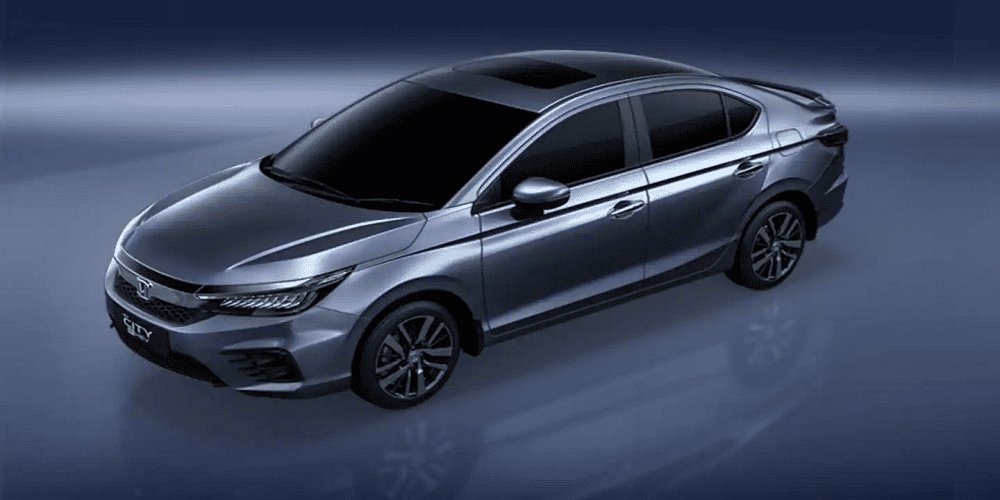
When you walk into a Honda showroom, the first thing the salesperson will likely tell you about the Honda City Hybrid is its astonishing fuel efficiency figure. You will hear numbers like twenty-seven kilometers per liter, perhaps even twenty-six point five under specific test cycles. These numbers are impressive on paper. They are the kind of digits that make you reconsider a pure electric vehicle or a diesel sedan. But let us be honest with each other. What really matters is not what a lab test says. What matters is the real-world Honda City Hybrid mileage you will experience on your daily commute through traffic jams, on poorly paved highways, and during those sudden rainstorms when visibility drops to near zero.
The Honda City Hybrid is not just another sedan. It is a statement that hybrid technology can be practical, affordable, and genuinely useful for the Indian market and similar congested urban environments worldwide. But to understand its fuel economy properly, we must strip away the marketing gloss. We need to talk about how the hybrid system actually works, how driving habits influence every single drop of petrol, and why the Honda City Hybrid mileage can either be your best friend or a slight disappointment, depending entirely on how you treat the accelerator pedal.
Understanding the Hybrid Heart
To truly appreciate the Honda City Hybrid mileage, you need to understand what is happening under the hood. This is not a mild hybrid system that simply assists during acceleration. Honda has equipped the City with a full strong hybrid system called the i-MMD, which stands for Intelligent Multi-Mode Drive. This system is clever because it does not force the petrol engine to work all the time. In fact, at low speeds and in stop-and-go traffic, the petrol engine often acts only as a generator. It runs at its most efficient rpm to charge the battery, while the electric motor actually drives the wheels.
This is where the magic happens. The electric motor provides instant torque. It pulls smoothly from a standstill without the need for the petrol engine to rev up noisily. In heavy traffic, when you are crawling from one red light to the next, the Honda City Hybrid mileage can be shockingly good. Many owners report figures between twenty-four and twenty-eight kilometers per liter in pure city driving, which defies the conventional wisdom that highways are always more efficient. For a conventional petrol car, city traffic is a nightmare. For this hybrid, city traffic is where it shines brightest.
The system switches between three modes. EV Drive uses only the battery and electric motor for short distances. Hybrid Drive uses the petrol engine as a generator to power the electric motor and charge the battery. Engine Drive uses a lockup clutch to connect the petrol engine directly to the wheels, which happens only at steady highway speeds. The seamless transition between these modes is what makes the Honda City Hybrid mileage so impressive. You barely feel the changes, but your fuel gauge certainly notices them.
City Driving Reality
Let us focus on the most common use case for this sedan. You live in a metropolitan area like Delhi, Mumbai, Bengaluru, or Chennai. Your daily commute is fifteen to twenty kilometers each way. You encounter at least six traffic signals, two railway crossings that are always down, and a stretch of road that is perpetually under construction. In this environment, a standard petrol Honda City would likely return between nine and eleven kilometers per liter. A diesel variant might give you fifteen to seventeen. The Honda City Hybrid mileage in this exact scenario typically hovers between twenty-two and twenty-six kilometers per liter.
Why the range? Because the battery state of charge matters greatly. When you start your car in the morning, the hybrid system needs a few minutes to warm up the petrol engine and bring the battery to an optimal level. For the first three to five minutes, your mileage might be slightly lower, around eighteen to twenty kilometers per liter. But once the system is warm and the battery has enough charge, the electric motor takes over more frequently. If your route has long stretches of slow-moving traffic where you never exceed forty kilometers per hour, you might spend seventy percent of your driving time in EV mode. That is when the numbers climb toward twenty-seven or even twenty-eight kilometers per liter.
However, there is a nuance that many reviewers do not mention. The battery pack in the Honda City Hybrid is not huge. It is a lithium-ion battery with a capacity of roughly one kilowatt-hour. In pure EV mode, the car can only travel about one to two kilometers before the petrol engine needs to kick in to recharge. This means that if your traffic jam is stop-and-go with short bursts of movement, the system works perfectly. The battery depletes slightly, then recharges during braking or when the engine runs as a generator. But if you are in a long, slow crawl where you are moving at five kilometers per hour for ten kilometers continuously, the battery will drain, and the engine will run more often to keep everything going. In that specific situation, the Honda City Hybrid mileage might drop to around eighteen to twenty kilometers per liter, which is still excellent but not the magical figure advertised.
Highway Performance
Take the Honda City Hybrid onto an open highway, and the story changes in an interesting way. On a smooth, four-lane road with little traffic, where you can comfortably cruise at ninety to one hundred kilometers per hour, the Honda City Hybrid mileage settles into a predictable pattern. Most drivers report figures between nineteen and twenty-two kilometers per liter. This is slightly lower than the peak city numbers, and it confuses some people. Why would a hybrid get worse mileage on the highway than in the city? The answer lies in aerodynamics and the limitations of electric-only driving.
At highway speeds, the electric motor alone cannot sustain the car for long. The energy required to push a sedan through the air at ninety kilometers per hour is significant. The battery would deplete in less than a minute under full highway load. Therefore, the system defaults to Engine Drive mode, where the 1.5-liter petrol engine connects directly to the wheels. This engine is tuned for efficiency, but it is still a naturally aspirated Atkinson-cycle engine. It delivers about ninety-eight horsepower, which is adequate but not powerful. When you are cruising at a constant speed, the Honda City Hybrid mileage is comparable to a very efficient conventional petrol sedan. The advantage of the hybrid system on the highway comes into play only when you encounter hills, need to overtake, or hit patches of traffic that slow you down to fifty or sixty kilometers per hour. In those moments, the electric motor assists, and the engine can shut off briefly, recovering some of the efficiency lost to pure cruising.
If you are the type of driver who maintains a steady throttle input, anticipates traffic flow, and avoids unnecessary braking, you can coax the highway mileage up to twenty-four kilometers per liter. But if you drive aggressively, constantly accelerating and braking, the system will struggle to keep the battery charged, and your mileage will fall to eighteen or even seventeen kilometers per liter. The key takeaway is that the Honda City Hybrid mileage rewards a smooth, patient driving style. It punishes aggression.
Real Owner Experiences
Instead of relying on official figures, let us look at what actual owners report after six months or a year of driving. On popular automotive forums and owner groups, a clear pattern emerges. Owners who drive primarily in dense urban environments with average speeds below thirty kilometers per hour consistently report a Honda City Hybrid mileage between twenty-three and twenty-seven kilometers per liter. One owner in Kolkata, known for its chronic traffic congestion, claimed to have achieved twenty-nine kilometers per liter over a week of careful driving without using the air conditioner. That is an outlier, but it demonstrates the potential.
Owners in mixed driving conditions, meaning forty percent city and sixty percent highway, report averages between twenty and twenty-three kilometers per liter. Owners who live in hilly regions, such as the outskirts of Pune or along the coastal roads of Kerala, report slightly lower figures of eighteen to twenty-one kilometers per liter because the constant elevation changes force the petrol engine to run more frequently. Cold weather also affects the Honda City Hybrid mileage. In northern India during winter, when temperatures drop below ten degrees Celsius, the petrol engine needs to run more often to maintain operating temperature and cabin heat. During these months, owners see a drop of two to three kilometers per liter.
The single biggest factor that owners highlight is the use of the air conditioner. In a hot climate like India, running the AC on full blast for an entire journey can reduce the Honda City Hybrid mileage by fifteen to twenty percent. The AC compressor is electrically driven, which means it draws power directly from the hybrid battery. When the battery is being drained by the AC, the petrol engine runs more frequently to recharge it. In extreme summer heat, with four passengers and the AC set to maximum cooling, the mileage can drop to around seventeen to nineteen kilometers per liter. This is still better than a conventional petrol car, which might give ten to twelve in the same conditions, but it is a noticeable difference from the optimistic lab figures.
Driving Techniques to Maximize Mileage
If you want to extract the best possible Honda City Hybrid mileage from your car, you need to change the way you think about driving. Forget everything you learned about revving engines and feeling the surge of power. This car rewards anticipation and gentleness. The first technique is to use the regenerative braking paddles behind the steering wheel. These paddles allow you to increase the level of regenerative braking, which captures energy when you lift off the accelerator and sends it back to the battery. In stop-and-go traffic, set the regeneration to the highest level. You will find that you rarely need to use the brake pedal. The car slows down smoothly, and the battery charges with every deceleration.
The second technique is to avoid sudden acceleration. The electric motor provides instant torque, which can be tempting. If you floor the accelerator from a standstill, the car will respond quickly, but the petrol engine will immediately roar to life to provide the necessary power. That surge of acceleration burns fuel rapidly. Instead, accelerate gently. Watch the power flow display on the instrument cluster. Try to keep the needle in the lower half of the power band. You will reach your desired speed only a few seconds later, but the difference in fuel consumption is substantial.
The third technique involves route planning. The Honda City Hybrid mileage is best when the battery is maintained between forty and seventy percent state of charge. If you know you have a long highway stretch ahead, do not deplete the battery in city driving beforehand. Let the system manage itself. Also, avoid short trips of less than three kilometers whenever possible. In very short trips, the engine runs mostly to warm itself up, and the hybrid system never reaches its optimal operating temperature. Your mileage on a two-kilometer trip to the grocery store might be only twelve to fourteen kilometers per liter. Combine multiple errands into one longer trip to let the system warm up and operate efficiently.
Comparison with Competitors
To understand whether the Honda City Hybrid mileage is truly class-leading, we must compare it to its natural rivals. The Toyota Hyryder and Grand Vitara hybrids are SUVs with a different weight profile. They return similar numbers of twenty to twenty-five kilometers per liter in city driving, but they are heavier and less aerodynamic. The Honda City Hybrid, being a lower sedan with a smaller frontal area, has an inherent advantage. Compared to the standard petrol Honda City, the hybrid offers roughly double the fuel efficiency in city conditions. Compared to diesel sedans, which are rapidly disappearing from the market, the hybrid offers similar or better efficiency with lower noise and vibration.
The more interesting comparison is with entry-level electric cars like the Tata Tiago EV or the Citroen eC3. Those electric cars have a lower cost per kilometer if you charge at home. However, they suffer from range anxiety and long charging times. The Honda City Hybrid offers the convenience of a conventional car with the efficiency of an electric car in city driving. You never need to search for a charging station. You simply fill up the thirty-five-liter fuel tank and drive over seven hundred kilometers before needing another fill. The peace of mind that comes from that range is a significant advantage that pure EVs cannot yet match in markets with sparse charging infrastructure.
Maintenance and Long-Term Costs
One concern that potential buyers often raise is the long-term cost of maintaining a hybrid system. Will the battery need replacement after five years? How much does it cost? These are valid questions. The lithium-ion battery in the Honda City Hybrid is designed to last the life of the car under normal use. Honda offers a warranty of eight years or one hundred sixty thousand kilometers on the hybrid battery, which is reassuring. In practice, hybrid batteries rarely fail completely. They slowly lose capacity over time, which may reduce the Honda City Hybrid mileage by ten to fifteen percent after ten years or two hundred thousand kilometers. Replacement of the battery pack, if needed, would cost approximately one to one point five lakh rupees, which is significant but not ruinous.
Regular maintenance for the hybrid is similar to a conventional City. You still need oil changes, air filter replacements, and brake fluid flushes. However, the brake pads last much longer because regenerative braking handles most of the stopping. Many owners report brake pads lasting over eighty thousand kilometers. The petrol engine runs less frequently, so oil change intervals can be extended if you drive mostly in EV mode. Overall, the total cost of ownership over five years is lower than a conventional petrol City, despite the higher initial purchase price, primarily because of the fuel savings.
Shortcomings and Honest Criticisms
No car is perfect, and the Honda City Hybrid has its weaknesses that affect real-world mileage. The most significant is the small boot space. The hybrid battery sits behind the rear seats, reducing trunk capacity from five hundred six liters in the standard City to just three hundred forty liters. For a family of four going on a weekend trip with luggage, this can be a problem. You will need to pack light or use soft-sided bags that can squeeze into the available space. This reduction in practicality is the price you pay for the hybrid system.
Another criticism is the lack of a spare tire. To save weight and space, Honda provides a puncture repair kit instead of a full-sized spare. If you get a sidewall puncture or a large gash, the repair kit will not help. You will need roadside assistance. This is not directly related to mileage, but it affects the ownership experience. Finally, the petrol engine can become noisy when it runs at high rpm to charge the battery. When you are sitting at a traffic light and the engine starts up to charge a depleted battery, the sound can be surprisingly loud and coarse. It breaks the serene silence that you expect from a hybrid. The Honda City Hybrid mileage remains excellent during this charging cycle, but the refinement takes a small hit.
Conclusion
The Honda City Hybrid mileage is not a single number. It is a range that depends on your driving style, your route, the weather, and how many passengers you are carrying. If you drive smoothly, anticipate traffic, use regenerative braking, and keep the air conditioner at a moderate setting, you can regularly achieve twenty-four to twenty-eight kilometers per liter in city driving. On highways, expect twenty to twenty-two kilometers per liter. In extreme conditions, such as heavy summer heat with full AC or very short trips, the numbers will drop to seventeen to nineteen kilometers per liter, which is still excellent for a petrol sedan.
What makes the Honda City Hybrid special is not just the peak efficiency but the consistency. Even in the worst conditions, it outperforms conventional petrol cars by a wide margin. It offers the range and convenience of a traditional car with the low running costs of an electric vehicle in urban environments. The initial purchase price is higher than the standard City, but if you drive more than fifteen thousand kilometers per year, the fuel savings will recover that difference within three to four years. The Honda City Hybrid mileage is a genuine engineering achievement, but like all achievements, it demands something from the driver. It demands patience, smoothness, and a willingness to adapt. If you can provide those things, the car will reward you with exceptional efficiency and a surprisingly enjoyable driving experience.
Short FAQs on Honda City Hybrid Mileage
Question 1: What is the official claimed Honda City Hybrid mileage as per testing standards?
Answer 1: The official claimed Honda City Hybrid mileage is twenty-seven kilometers per liter under the ARAI testing standards. This figure is achieved in controlled lab conditions and serves as a benchmark for comparison. Real-world results typically range between nineteen and twenty-six kilometers per liter depending on driving conditions and habits.
Question 2: Does the Honda City Hybrid mileage drop significantly when the air conditioner is used?
Answer 2: Yes, using the air conditioner can reduce the Honda City Hybrid mileage by approximately fifteen to twenty percent. The AC compressor draws power from the hybrid battery, causing the petrol engine to run more frequently for recharging. In extreme summer heat with maximum cooling, the mileage may drop to around seventeen to nineteen kilometers per liter.
Question 3: Can I improve the Honda City Hybrid mileage by changing my driving style?
Answer 3: Absolutely. Smooth acceleration, gentle braking, and using the regenerative braking paddles can significantly improve the Honda City Hybrid mileage. Avoiding sudden throttle inputs and maintaining steady speeds helps the system stay in EV mode longer. Anticipating traffic flow and coasting to decelerate rather than braking hard will also enhance efficiency.
Question 4: Is the Honda City Hybrid mileage better in city traffic or on highways?
Answer 4: The Honda City Hybrid mileage is typically better in dense city traffic with speeds below forty kilometers per hour, where the electric motor can handle most of the driving. In such conditions, owners report twenty-three to twenty-seven kilometers per liter. On highways at steady speeds of ninety to one hundred kilometers per hour, the mileage is slightly lower at nineteen to twenty-two kilometers per liter.
Question 5: How does cold weather affect the Honda City Hybrid mileage?
Answer 5: Cold weather reduces the Honda City Hybrid mileage by two to three kilometers per liter. The petrol engine needs to run more frequently to maintain its optimal operating temperature and to provide cabin heat. In northern Indian winters with temperatures below ten degrees Celsius, the fuel efficiency may be noticeably lower than in warmer months.
Question 6: What is the real-world average Honda City Hybrid mileage that most owners report?
Answer 6: Based on extensive owner reports from online forums and user groups, the real-world average Honda City Hybrid mileage falls between twenty and twenty-three kilometers per liter in mixed driving conditions. Owners who drive primarily in heavy traffic and use efficient techniques often exceed twenty-five kilometers per liter, while those with highway-heavy commutes see figures closer to twenty kilometers per liter.
Leave A Comment
0 Comment