
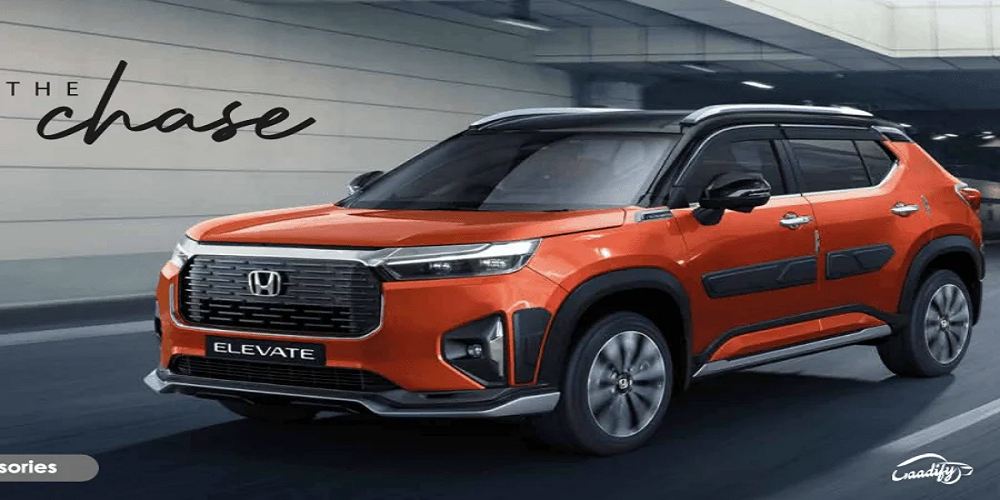
While crash test scores are an important benchmark, real-world driving conditions provide another perspective on vehicle safety. The Honda Elevate safety rating is supported by the SUV's solid engineering, predictable handling, and dependable braking system. These qualities help drivers maintain control during sudden lane changes, emergency braking, and adverse weather conditions.
Owners frequently appreciate the stable driving dynamics of the Honda Elevate. The suspension is tuned to absorb road imperfections while maintaining vehicle balance at highway speeds. Combined with responsive steering, the SUV inspires confidence on long journeys and in urban traffic.
The vehicle's elevated driving position also improves visibility, allowing drivers to better anticipate traffic conditions and potential hazards.
How Honda Designs Vehicles for Safety
Honda has built its reputation by prioritizing passenger protection through advanced engineering. The Honda Elevate safety rating reflects years of research into crash energy management and occupant safety.
Some key engineering principles include:
Advanced Compatibility Engineering (ACE)
Honda's ACE body structure helps distribute crash forces more evenly throughout the vehicle. Instead of concentrating impact energy in one area, the structure channels it away from passengers.
Benefits include:
- Better frontal collision protection
- Reduced cabin deformation
- Improved occupant survival space
- Enhanced compatibility with vehicles of different sizes
High-Strength Steel Construction
The Honda Elevate uses high-strength steel in critical structural areas. This improves rigidity without significantly increasing weight.
Advantages include:
- Stronger passenger compartment
- Better crash protection
- Improved handling
- Greater durability
Driver Assistance Features
The Honda Elevate safety rating is strengthened by several technologies that actively assist the driver.
Vehicle Stability Assist (VSA)
VSA helps maintain vehicle stability by automatically applying brake force to individual wheels when necessary.
It becomes particularly useful during:
- Wet roads
- Sharp turns
- Emergency maneuvers
- Slippery surfaces
Hill Start Assist
This feature prevents the vehicle from rolling backward when starting on an incline.
Benefits include:
- Easier hill driving
- Better control
- Reduced accident risk
- Increased driver confidence
Emergency Stop Signal
During sudden braking, the hazard lights flash rapidly to warn vehicles behind.
This reduces the likelihood of rear-end collisions.
Braking Performance
Reliable braking is an important factor in the Honda Elevate safety rating.
The SUV includes:
- Anti-lock Braking System (ABS)
- Electronic Brake-force Distribution (EBD)
- Brake Assist
- Disc brakes (front)
- Rear braking system optimized for stability
Together, these systems reduce stopping distance while maintaining steering control.
Airbag Protection
Modern SUVs require comprehensive airbag protection, and the Honda Elevate offers multiple airbags depending on the variant.
Airbags help protect:
- Driver
- Front passenger
- Side occupants
- Head area
- Knee area (on selected variants)
Combined with seatbelts and pretensioners, airbags significantly reduce injury during collisions.
Child Safety
Families often consider the Honda Elevate safety rating before purchasing a compact SUV.
Honda provides several child-focused safety features.
ISOFIX Child Seat Mounts
These mounting points securely attach compatible child seats.
Benefits include:
- Easier installation
- Better stability
- Reduced installation errors
- Improved child protection
Rear Door Child Lock
This prevents children from opening rear doors while the vehicle is moving.
Rear Seat Safety
The rear seating area is designed to provide:
- Three-point seat belts
- Proper head restraints
- Comfortable seating posture
- Improved crash protection
Pedestrian Safety
Vehicle safety extends beyond occupants.
Honda has designed the Elevate with features intended to reduce injury risk for pedestrians.
These include:
- Energy-absorbing front structure
- Carefully designed hood
- Optimized bumper design
- Improved impact management
Although pedestrian protection is only one part of crash testing, it contributes to overall vehicle safety.
Safety During Highway Driving
Highway travel exposes vehicles to higher speeds and greater collision forces.
The Honda Elevate safety rating benefits from characteristics that support safe highway driving.
These include:
- Stable suspension
- Predictable steering
- Good straight-line stability
- Effective braking
- Strong body structure
Drivers often report that the Elevate feels composed even during long-distance journeys.
Safety During City Driving
Urban environments present different challenges.
The Honda Elevate performs well thanks to:
- Good visibility
- Light steering
- Responsive brakes
- Rear parking camera
- Parking sensors
These features make navigating crowded roads much easier.
Comparing Honda Elevate with Rivals
When comparing compact SUVs, buyers often look beyond design and performance.
Honda Elevate vs Hyundai Creta
The Hyundai Creta offers many advanced features, but the Honda Elevate focuses heavily on structural safety and driving confidence.
Both provide:
- Multiple airbags
- ABS with EBD
- Electronic stability control
- Hill assist
Honda's engineering reputation remains a major advantage.
Honda Elevate vs Kia Seltos
The Kia Seltos includes numerous premium technologies.
However, the Honda Elevate safety rating appeals to buyers who prioritize reliability, build quality, and long-term durability.
Honda Elevate vs Maruti Grand Vitara
The Grand Vitara is fuel-efficient and feature-rich.
The Elevate stands out through:
- Strong structural design
- Smooth handling
- Excellent visibility
- Trusted Honda reliability
Maintenance Tips for Maximum Safety
Even the highest-rated SUV requires regular maintenance.
To maintain the Honda Elevate safety rating in practical use:
Inspect Tires Regularly
Check:
- Tire pressure
- Tread depth
- Sidewall condition
- Wheel alignment
Healthy tires improve braking and stability.
Service Brakes
Brake components should be inspected during scheduled servicing.
Replace worn:
- Brake pads
- Brake discs
- Brake fluid
Check Airbags
Warning lights should never be ignored.
Visit an authorized service center if the airbag indicator remains illuminated.
Seat Belt Inspection
Ensure all seat belts:
- Retract smoothly
- Lock properly
- Show no visible damage
Seat belts remain the first line of protection during crashes.
Suspension Inspection
Suspension wear affects handling and braking.
Regular servicing keeps the SUV stable on rough roads.
Factors That Influence Crash Test Ratings
The Honda Elevate safety rating depends on several evaluation areas.
Crash testing typically measures:
- Frontal impact protection
- Side impact protection
- Pole impact performance
- Child occupant protection
- Pedestrian protection
- Safety assist technologies
Strong performance across these categories results in higher ratings.
Why Buyers Trust Honda Safety
Honda has decades of experience building reliable passenger vehicles.
Reasons buyers trust Honda include:
- Proven engineering
- Consistent quality
- Reliable braking
- Durable construction
- Long-term dependability
The Elevate continues this tradition by offering a balanced combination of comfort and safety.
Is the Honda Elevate Safe for Families?
Yes.
Families looking for a compact SUV often consider the Honda Elevate safety rating because it combines practical features with strong occupant protection.
It offers:
- Spacious cabin
- Child seat compatibility
- Multiple airbags
- Electronic safety systems
- Excellent visibility
- Comfortable seating
These qualities make it suitable for daily commuting and long road trips.
Future Safety Improvements
As automotive technology evolves, Honda may introduce additional features in future Elevate updates.
Potential improvements include:
- More advanced driver assistance systems
- Additional airbags
- Improved collision avoidance technologies
- Enhanced pedestrian detection
- Updated safety software
- Connected emergency assistance
These updates could further strengthen the Honda Elevate's position in the compact SUV segment.
Final Verdict
The Honda Elevate safety rating is one of the SUV's strongest selling points. Honda has combined a robust body structure, advanced safety technologies, reliable braking systems, and practical driver assistance features to create a vehicle that inspires confidence on every journey.
Whether driving through busy city streets or cruising on highways, the Elevate provides reassuring levels of protection for both the driver and passengers. Its Advanced Compatibility Engineering body structure, multiple airbags, electronic stability systems, and child safety features demonstrate Honda's commitment to passenger safety.
Although safety ratings are only one aspect of purchasing a vehicle, they remain an essential factor for families and daily commuters. The Honda Elevate offers a well-rounded package that balances performance, comfort, reliability, and safety. For buyers seeking a dependable compact SUV with strong safety credentials, the Honda Elevate remains a compelling choice.
Frequently Asked Questions
1. What is the Honda Elevate safety rating?
The Honda Elevate has earned recognition for its strong structural design and comprehensive safety features. Buyers should refer to the latest official crash test results from recognized testing agencies for the most current rating.
2. Does the Honda Elevate have six airbags?
Yes, selected variants of the Honda Elevate come equipped with six airbags to enhance occupant protection during collisions.
3. Is the Honda Elevate suitable for family use?
Yes. Its spacious cabin, child safety features, multiple airbags, and stability systems make it a practical family SUV.
4. Does the Honda Elevate include Electronic Stability Control?
Yes, Electronic Stability Control (also called Vehicle Stability Assist) is available on the Honda Elevate to improve handling during emergency situations.
5. What safety features are standard on the Honda Elevate?
Standard safety equipment includes ABS with EBD, airbags, seat belt reminders, rear parking sensors, a rearview camera, and other essential driver assistance features depending on the variant.
6. Does the Honda Elevate have ISOFIX child seat mounts?
Yes, the Honda Elevate provides ISOFIX child seat anchor points for secure child seat installation.
7. How does the Honda Elevate compare with Hyundai Creta in safety?
Both SUVs offer strong safety features, but many buyers appreciate the Honda Elevate for its solid body construction, dependable handling, and Honda's reputation for long-term reliability.
8. Why is the Honda Elevate safety rating important?
The Honda Elevate safety rating helps buyers evaluate how effectively the SUV protects occupants during collisions and reflects the quality of its structural design and safety technologies.
9. Does the Honda Elevate include hill start assist?
Yes, hill start assist is available to prevent rollback when starting on steep inclines.
10. Is the Honda Elevate a good choice for long-distance travel?
Yes. Its stable handling, comfortable ride quality, effective braking system, and comprehensive safety features make it well-suited for highway journeys and long road trips.
Leave A Comment
0 Comment