
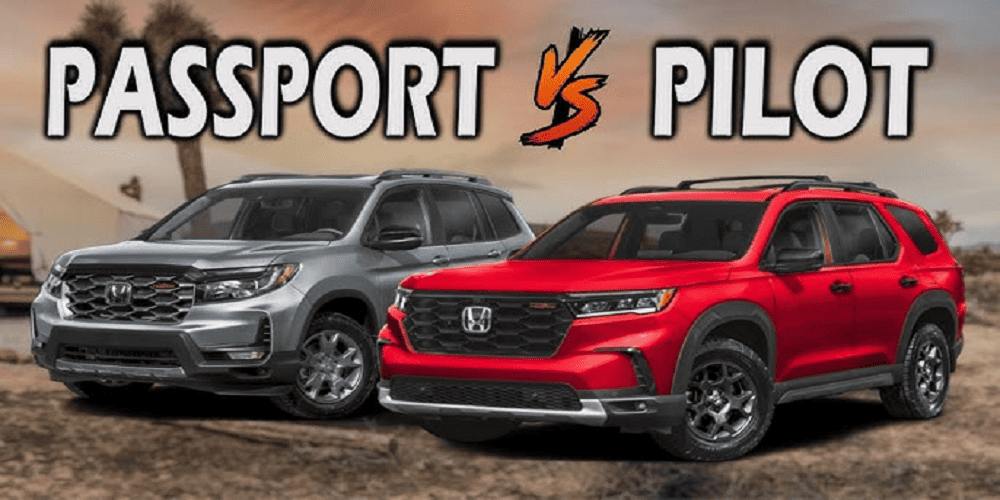
Honda has built a solid reputation for making reliable, versatile, and family-friendly SUVs. Among its lineup, the Honda Passport and Honda Pilot stand out as two popular choices for buyers who want the dependability of the brand combined with plenty of interior space and comfort. Although they share the same DNA, these two SUVs cater to slightly different needs. If you are torn between the Honda Passport and the Honda Pilot, this in-depth comparison will help you make an informed decision.
Understanding the Honda Passport
The Honda Passport is often described as the rugged sibling of the Pilot. It sits between the compact CR-V and the larger Pilot in Honda’s SUV family. First introduced in the 1990s and reintroduced in 2019, the Passport offers a more adventure-ready design compared to the more family-focused Pilot.
The Passport is a two-row midsize SUV that seats up to five passengers. It features a strong V6 engine, plenty of ground clearance, and standard front-wheel drive, with all-wheel drive available on all trims. Its design emphasizes a sporty and off-road-ready aesthetic, making it appealing to drivers who enjoy outdoor activities or need to navigate rough terrain occasionally.
Understanding the Honda Pilot
The Honda Pilot is Honda’s largest SUV and has been a favorite among families for many years. With three rows of seats, the Pilot can accommodate up to eight passengers, making it an excellent choice for larger families or for those who frequently carpool. The Pilot has a more conservative and sophisticated exterior design compared to the Passport.
Like the Passport, the Pilot comes with a capable V6 engine and offers both front-wheel and all-wheel drive options. It is known for its smooth ride, spacious cabin, and advanced safety and driver-assistance features.
Design and Styling
When comparing the design of the Honda Passport vs Pilot, the differences are clear even at first glance. The Passport has a shorter overall length and a more aggressive stance. It sits slightly higher off the ground, giving it better approach and departure angles for off-road driving. The blacked-out grille, larger wheels, and rugged body cladding all contribute to its adventurous look.
On the other hand, the Pilot maintains a more refined and polished look. Its longer body and larger footprint give it a commanding road presence but with a design that leans toward suburban sophistication rather than off-road ruggedness. The Pilot’s exterior styling is more restrained, which might appeal to those who prefer a classic SUV appearance.
Interior Space and Comfort
Inside, both SUVs deliver on Honda’s promise of comfort and practicality, but there are significant differences due to their size and seating configuration.
The Passport’s two-row layout provides ample space for five passengers. The rear seats are roomy, offering plenty of legroom and headroom even for taller adults. The absence of a third row allows for a larger cargo area behind the second row, making the Passport one of the roomiest two-row SUVs in its class. It is ideal for carrying bulky gear, luggage, or outdoor equipment.
The Pilot, by contrast, shines in its ability to transport more people. The three rows can seat up to eight passengers when configured with a second-row bench, or seven passengers if you opt for second-row captain’s chairs in higher trims. The third row is best suited for kids or smaller adults on short trips. While the cargo space is slightly reduced with all seats in use, folding down the rear rows reveals a large and flexible cargo area.
Performance and Handling
Both the Passport and Pilot share the same 3.5-liter V6 engine, which produces about 280 horsepower and 262 lb-ft of torque. This engine provides smooth and responsive acceleration in both SUVs. They also use a nine-speed automatic transmission that shifts seamlessly in most driving conditions.
In terms of ride and handling, the Passport has a slightly sportier feel thanks to its shorter wheelbase and lighter weight. It feels more nimble around corners and easier to maneuver in tight spots. Its higher ground clearance and available all-wheel drive with Honda’s Intelligent Traction Management make it more capable on dirt roads, gravel paths, and light off-roading.
The Pilot offers a more composed and cushioned ride, with suspension tuning that prioritizes passenger comfort. Its longer wheelbase helps it soak up road imperfections smoothly, which is appreciated on long highway drives. The Pilot can handle mild off-road trails, but it is better suited for urban and suburban roads.
Technology and Features
Honda equips both SUVs with a wide array of tech and convenience features. Standard on both models are features like an 8-inch touchscreen, Apple CarPlay, Android Auto, and Honda’s suite of advanced driver-assistance systems called Honda Sensing. This suite includes adaptive cruise control, lane-keeping assist, forward collision warning, and automatic emergency braking.
Higher trims add more luxurious touches such as leather upholstery, a premium audio system, built-in navigation, rear-seat entertainment (Pilot only), wireless phone charging, and a hands-free power tailgate.
The Pilot, being more family-focused, offers additional features to make life easier for families with kids. For example, the available CabinTalk in-car PA system lets the driver communicate easily with rear-seat passengers through the audio system. It also has more USB ports and cup holders to keep everyone comfortable and connected.
Safety
Safety is a key factor when choosing an SUV, and both models perform well in this regard. They come standard with Honda Sensing, which provides a comprehensive set of safety technologies. Both SUVs have received high safety ratings from agencies like the National Highway Traffic Safety Administration (NHTSA) and the Insurance Institute for Highway Safety (IIHS).
Parents will appreciate the Pilot’s additional child seat anchors and spacious back rows, making it easy to install multiple child seats. The Passport’s two-row configuration limits how many car seats can be installed simultaneously but still provides a secure and comfortable setup for families with fewer kids.
Fuel Efficiency
Given that both vehicles share the same engine, their fuel economy is quite similar, though the Pilot’s larger size and weight mean it uses slightly more fuel. The Passport generally achieves around 20 mpg in the city and 25 mpg on the highway for front-wheel drive models, while the Pilot averages around 19 mpg city and 27 mpg highway. Opting for all-wheel drive reduces fuel economy by a small margin in both SUVs.
Towing Capacity
If you plan to tow a trailer, boat, or camper, both the Passport and Pilot have respectable towing capacities. Properly equipped, they can tow up to 5,000 pounds with all-wheel drive. Front-wheel drive models are rated slightly lower, around 3,500 pounds. For most weekend adventures, camping trips, or small trailers, either SUV should be up to the task.
Pricing and Value
Pricing is another important factor in the Honda Passport vs Pilot debate. Generally, the Passport costs slightly less than a comparably equipped Pilot because of its smaller size and fewer seats. The starting MSRP for the Passport is usually in the mid-$40,000 range for base trims and can climb higher with premium trims and options.
The Pilot starts around a similar base price but goes higher in top trims due to the additional features and third-row seating. Buyers should consider how often they need the extra space and seats to determine if the extra cost is worth it.
Honda vehicles tend to hold their value well, and both the Passport and Pilot have strong resale value compared to other midsize SUVs.
Which Should You Choose?
Choosing between the Honda Passport and the Honda Pilot comes down to your lifestyle and priorities.
Choose the Honda Passport if:
- You prefer a rugged, sportier SUV look
- You do not need a third row of seats
- You plan to use the SUV for light off-roading or outdoor adventures
- You want slightly more cargo space behind the second row
Choose the Honda Pilot if:
- You need three rows for a large family or frequent carpooling
- You prefer a smoother, more refined ride for daily commuting and road trips
- You want extra features designed for family convenience
- You prioritize maximum passenger capacity and flexibility
Both models excel at what they are designed for, so there is really no bad choice here.
Ownership Costs
Owning either a Passport or Pilot comes with reasonable long-term costs. Honda’s reputation for reliability means fewer unexpected repairs, and both models benefit from accessible parts and widespread dealer networks. Insurance rates are comparable, though the Pilot may cost slightly more to insure due to its higher value and extra passenger capacity.
Routine maintenance, like oil changes, brake service, and tire rotations, is similar for both. Many Honda dealers offer prepaid maintenance plans which can help manage costs over the first few years.
Verdict
The Honda Passport and Pilot share a strong foundation of performance, reliability, and comfort. Your decision should focus on how much space you really need and how you plan to use the vehicle.
The Passport appeals to adventurous drivers who do not need to haul a big group regularly. Its roomy cargo area and capable off-road personality make it a great companion for outdoor trips.
The Pilot is the go-to choice for larger families who need the extra seats and appreciate the comfort and family-friendly features that make long trips more enjoyable for everyone.
Either way, you will be getting a well-built SUV backed by Honda’s commitment to quality and safety.
FAQs
1. Which SUV is bigger, the Honda Passport or the Honda Pilot?
The Honda Pilot is larger overall. It has three rows of seats and a longer body, making it better suited for bigger families. The Passport is a two-row midsize SUV with a shorter length and sportier design.
2. Is the Honda Passport good for off-roading?
Yes, the Honda Passport is more off-road capable than the Pilot. It has higher ground clearance and a more rugged build. While not designed for extreme off-roading, it handles dirt roads, gravel, and mild trails comfortably.
3. Does the Honda Pilot have more cargo space than the Passport?
It depends. With all seats in use, the Pilot has less cargo space than the Passport because of the third row. However, when the rear rows are folded down, the Pilot offers more total cargo capacity.
4. Which SUV is more fuel-efficient?
Their fuel economy is very similar since they share the same engine. The Passport has slightly better city mileage due to its lighter weight, while the Pilot can be a bit more efficient on the highway.
5. Which one should I buy for a large family?
For larger families, the Honda Pilot is the better choice. Its three-row seating and extra family-friendly features make it ideal for carrying more passengers comfortably.
Leave A Comment
0 Comment