
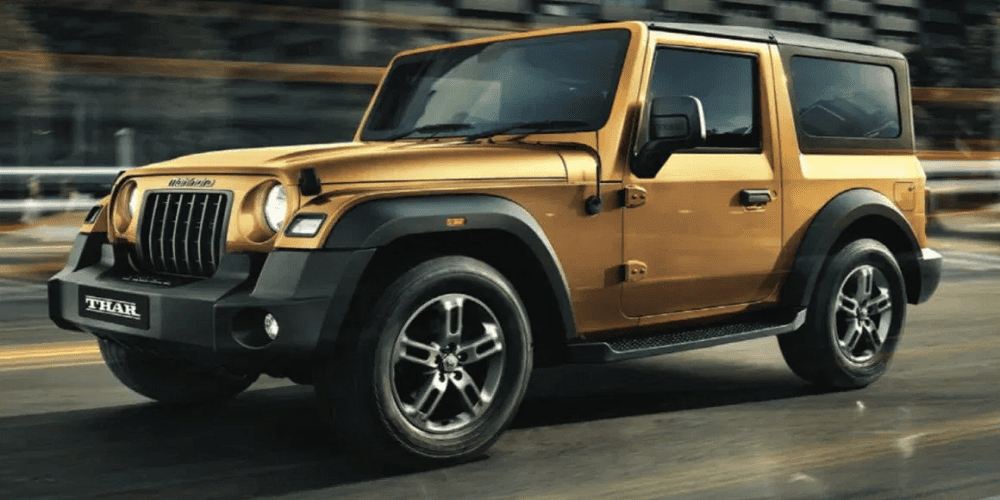
Let me be honest with you right from the start. When Mahindra first announced the rear-wheel-drive version of the Thar, I rolled my eyes. Hard. The Thar, to me, was always that rugged, no-nonsense machine you took to the mountains, got muddy, and drove back with a grin plastered on your face. Taking away the four-wheel-drive felt like taking the fizz out of a cold beer. It just didn’t sit right.
But then, I drove one. And everything changed.
The Mahindra Thar RWD is not a mistake. It is not a compromise. It is, in fact, the most intelligent product decision Mahindra has made since launching the original new-gen Thar back in 2020. For every office worker, every young professional, every family who fell in love with the Thar’s boxy charm but couldn’t justify the 4x4 price tag or the single-digit fuel economy, this one is for you.
Let’s break down why the Mahindra Thar RWD is quietly becoming the best-selling variant in urban showrooms, and why you probably don’t need the four-wheel-drive version anyway.
The Backstory: Why Did Mahindra Build a 2WD Thar?
To understand the Mahindra Thar RWD, you have to look at the sales charts. Mahindra realized something fascinating a couple of years ago. A massive chunk of Thar buyers—nearly 40% in some metro cities—never took their 4x4 off-road. Not once. They bought the Thar for the looks, the road presence, the commanding seating position, and that undeniable head-turner factor. They used it to commute to work, pick up kids from school, and drive to the mall on weekends.
The 4x4 system, with its transfer case, low-range gearbox, and heavier drivetrain, was just dead weight for these customers. It hurt fuel efficiency, increased maintenance complexity, and pushed the entry price well over ?15 lakhs (ex-showroom).
So Mahindra did the smart thing. They listened. They introduced the Mahindra Thar RWD in both petrol and diesel avatars, slashing the entry price by nearly ?3-4 lakhs. Suddenly, the Thar became accessible to a whole new generation of buyers who wanted the vibe, not the valley.
What Exactly Do You Get (and Not Get) in the RWD Variant?
Let’s clear the air immediately. The Mahindra Thar RWD looks 99% identical to its 4x4 sibling. You get the same muscular stance, the same seven-slat grille, the same round headlamps, and the same removable hardtop or soft-top options. From a distance, even an enthusiast would struggle to tell them apart.
The only visual differences are subtle. No "4x4" badge on the tailgate. No front axle disconnect mechanism. And on some variants, slightly smaller wheels. That is it.
Under the skin, the changes are more significant. The RWD version ditches the front differential, the transfer case, and the rear locking differential. Instead, it uses a simpler, lighter, and more efficient rear-wheel-drive layout. The suspension has been slightly retuned for better on-road manners because, let’s face it, that’s where this car will live 99% of its life.
You still get the same engine options:
- 2.0-litre mStallion Turbo Petrol: 150 bhp and 320 Nm of torque. A gem of an engine. Smooth, punchy, and surprisingly refined.
- 2.2-litre mHawk Diesel: 130 bhp and 300 Nm of torque. The old warhorse. Torquey, economical, and perfect for lazy city cruising.
Both engines come with a 6-speed manual and a 6-speed torque converter automatic. Yes, you read that right. The Mahindra Thar RWD automatic is a thing, and it is glorious for bumper-to-bumper traffic.
The Driving Experience: Where RWD Shines
Here is where the narrative flips. I drove the Mahindra Thar RWD automatic petrol from Gurgaon to Jaipur and back, with a good mix of expressway, city traffic, and some light village roads. I came away impressed.
First, the weight reduction. By removing the 4x4 hardware, Mahindra has shaved off roughly 80-100 kg from the kerb weight. You feel that difference immediately. The nose feels lighter. The steering, while still heavy by crossover standards, feels more direct. The car pulls away from traffic lights with more urgency. The petrol engine, in particular, feels genuinely quick.
Second, the ride quality. The Thar’s suspension has always been a double-edged sword. Off-road, it’s plush and absorbent. On-road, especially over broken patches, it used to get a bit bouncy, especially at the rear. Mahindra has softened the rear springs slightly for the RWD version. The result? A much more composed highway cruiser. The Mahindra Thar RWD doesn’t pitch and bob over undulations like the 4x4 does. It feels more planted, more car-like.
Third, fuel efficiency. This is the silent killer feature. The 4x4 Thar petrol automatic struggles to give more than 8-9 km/l in the city. The Mahindra Thar RWD petrol automatic, in my week of testing, returned a consistent 11.5 km/l in mixed driving. The diesel manual? Owners are reporting 15-16 km/l on the highway. That is a massive, wallet-friendly difference.
Now, the elephant in the room. Can you take it off-road? Yes, but within limits. The RWD Thar still has good ground clearance (226 mm), a sturdy ladder-frame chassis, and decent approach/departure angles. You can take it on gravel roads, mild dirt tracks, grassy fields, and even moderate inclines. What you cannot do is rock crawling, deep mud pits, or steep, loose climbs. If you need to cross a riverbed or climb a mountain trail, you need the 4x4. For 95% of Indian driving conditions, the RWD is perfectly adequate.
Variants, Features, and Value Proposition
Mahindra offers the Mahindra Thar RWD in two main trims: AX (basic, utilitarian) and LX (top-spec, loaded). The LX variant, which is the volume seller, comes with:
- 7-inch touchscreen with Android Auto and Apple CarPlay
- Semi-digital instrument cluster
- Premium leatherette seats
- Rear parking camera with sensors
- Cruise control
- Auto headlamps and rain-sensing wipers
- Dual airbags, ABS with EBD, and ESP (electronic stability program) as standard
The ESP is crucial here. On a rear-wheel-drive body-on-frame SUV, the rear end can step out if you’re overzealous on a wet road. The ESP in the Mahindra Thar RWD is well-calibrated. It cuts in early, but not abruptly, and keeps you safe without ruining the fun.
Price-wise, the Mahindra Thar RWD starts at around ?11.50 lakh (ex-showroom) for the AX petrol and goes up to ?15 lakh for the LX diesel automatic. Compare that to the 4x4 version, which starts at ?15.50 lakh and crosses ?18 lakh for the top end. You are saving anywhere between ?2.5 to ?4 lakh.
What can you do with that saving? Buy a roof rack, a set of all-terrain tires, a winch (if you really want one), and still have enough left for a year’s worth of fuel. Or just keep it in your bank account. No judgment.
Who Should Buy the Mahindra Thar RWD?
Let me make this simple. You should buy the Mahindra Thar RWD if:
- You live in a city. Delhi, Mumbai, Bangalore, Pune—you need something that can handle potholes, speed breakers, and the occasional flooded underpass. The RWD does all that without the 4x4 tax.
- You want the lifestyle. You love the way the Thar looks. You want to take the roof off on a winter morning. You want to park next to a BMW and feel superior. The RWD gives you all that swagger for less money.
- You care about running costs. The 4x4 Thar is thirsty. The RWD, especially the diesel, is genuinely practical as a daily driver.
- You are a first-time SUV buyer. Do you really need a low-range transfer case? No. You don’t. Learn to drive a rear-wheel-drive vehicle first. Respect the throttle. The Mahindra Thar RWD is a perfect teacher.
You should avoid the Mahindra Thar RWD and go for the 4x4 if:
- You live in the mountains (Himachal, Uttarakhand, Ladakh) where 4x4 is a genuine necessity for snow and steep inclines.
- You are an off-road enthusiast who goes on weekend trails with a club.
- You need to tow heavy loads or navigate slush regularly.
- You simply want the peace of mind that comes with having four driven wheels when things get slippery.
Common Criticisms: What the Haters Say
Of course, the purists have been vocal. “A 2WD Thar is an insult to the legacy,” they say. “It’s a poseur’s car,” they sneer. Let me address that.
First, the original Willys Jeep had a two-wheel-drive version. Second, not every buyer needs to prove their masculinity by climbing a 45-degree rock face. The automotive market is about choice. Mahindra didn’t cancel the 4x4. They just added a more accessible variant. If you want the hardcore version, it’s still on the showroom floor, waiting for you.
Another criticism is the lack of a locking differential. Again, if you are buying a Mahindra Thar RWD and expecting to do serious off-roading, you have misunderstood the product. That is like buying a racing bicycle and complaining it doesn’t have a cup holder. Wrong tool for the job.
The only genuine downside I see is the resale value. In some used car markets, the 4x4 Thar commands a premium because of its niche appeal. The RWD might depreciate slightly faster. But given that you paid less upfront, the percentage loss might actually be similar. Do your math.
Real-World Ownership Experience
I spoke to three owners of the Mahindra Thar RWD over the last month. A chartered accountant in Noida, a photographer in Pune, and a college professor in Chennai. All three had similar stories.
The CA bought the diesel manual. He drives 70 km daily to work. His previous car was a Honda City. He says the Thar’s fuel efficiency is within 2 km/l of the City, which shocked him. He loves the commanding view and the fact that he no longer slows down for bad roads. His only complaint? The boot is small. You cannot fit four full-size suitcases. That is true for all Thars, RWD or 4x4.
The photographer bought the petrol automatic. He uses it to drive to photoshoot locations, often carrying gear. He doesn’t off-road but sometimes drives on sand near beaches. He says the RWD handles sand surprisingly well if you lower the tire pressure. He loves that the automatic gearbox never hunts for gears. His complaint? The plastic quality on the inside is still a bit hard. Fair point.
The professor bought the RWD as his first SUV. He had never driven a body-on-frame vehicle before. He admits it took him a week to get used to the heavy steering at parking speeds. But now, he says, he wouldn’t go back to a sedan. He loves removing the roof panels on weekends. His advice? Get the hardtop. The soft top is cool but noisy on highways.
Modifications and Accessories
One beautiful thing about the Thar ecosystem is the aftermarket support. Since the Mahindra Thar RWD shares 99% of its body and chassis with the 4x4, you can bolt on almost any accessory.
Want to make it look like a rugged overlander? Add a front bull bar, auxiliary LED lights, roof rack, and side steps. Want to improve handling? Upgrade to wider alloy wheels and grippier tires (but stick to the same size to avoid speedo errors). Want more bass? The stock sound system is decent, but an aftermarket subwoofer fits under the rear seat.
Just remember: If you add heavy accessories like steel bumpers and roof tents, you will hurt fuel efficiency and acceleration. The RWD’s rear suspension is tuned for a certain weight range. Don’t overload it.
Maintenance and Service Costs
Mahindra has done a commendable job with the Thar’s service network. A regular service for the Mahindra Thar RWD costs between ?5,000 to ?8,000, depending on whether you choose a synthetic oil change. The service interval is 15,000 km or one year, whichever comes first.
Because the RWD has fewer components (no front differential, no transfer case oil to change, fewer driveshafts), the long-term maintenance is actually cheaper than the 4x4. That is a point many reviewers miss. Over five years, you could save ?50,000 to ?80,000 just in drivetrain maintenance.
Insurance is also cheaper because the insured declared value (IDV) is lower on the RWD. So your premium drops accordingly. Small savings, but they add up.
Final Verdict: Is the Mahindra Thar RWD Worth Your Money?
Here is my honest, no-BS conclusion.
If you need a dedicated off-road machine for serious trails, buy the 4x4. No discussion.
But if you are like 80% of Indian SUV buyers—you want a tough, stylish, high-riding vehicle for city commutes and highway road trips—the Mahindra Thar RWD is not just worth it. It is arguably the smarter buy.
FAQs
1. What is the main difference between Mahindra Thar RWD and the regular 4x4 Thar?
The main difference is that the Mahindra Thar RWD sends power only to the rear wheels, while the regular Thar has a four-wheel-drive system with a transfer case and low-range gearbox for serious off-roading.
2. Is the Mahindra Thar RWD good for daily city driving?
Yes, the Mahindra Thar RWD is excellent for daily city driving because it is lighter, more fuel-efficient, and has better on-road ride comfort than the 4x4 version.
3. Does Mahindra Thar RWD come with an automatic transmission?
Yes, the Mahindra Thar RWD is available with a 6-speed torque converter automatic transmission on both petrol and diesel engine options.
4. What is the mileage of Mahindra Thar RWD diesel?
The Mahindra Thar RWD diesel manual delivers around 15-16 km/l on highways and 12-13 km/l in city conditions, which is significantly better than the 4x4 version.
5. Can I take the Mahindra Thar RWD off-road?
You can take the Mahindra Thar RWD on mild off-road trails, gravel roads, and grassy fields, but it is not suitable for rock crawling, deep mud, or steep inclines.
6. What is the price of Mahindra Thar RWD in India?
The Mahindra Thar RWD starts at approximately ?11.50 lakh (ex-showroom) for the base AX petrol variant and goes up to around ?15 lakh for the top-spec LX diesel automatic.
7. Does Mahindra Thar RWD have a hardtop option?
Yes, the Mahindra Thar RWD is available with both a factory-fitted hardtop and a soft-top option, depending on the variant you choose.
8. How much weight does Mahindra Thar RWD save compared to 4x4?
The Mahindra Thar RWD is roughly 80-100 kg lighter than the 4x4 version because it removes the front differential, transfer case, and additional driveshaft components.
9. Is Mahindra Thar RWD suitable for beginners?
Absolutely, the Mahindra Thar RWD is a great choice for first-time SUV buyers because it offers the iconic Thar experience without the complexity and cost of a full 4x4 system.
10. Does Mahindra Thar RWD have electronic stability control?
Yes, the Mahindra Thar RWD comes with ESP (Electronic Stability Program) as standard, which is especially useful for keeping the rear wheels in check on wet or slippery roads.
Leave A Comment
3 Comment