
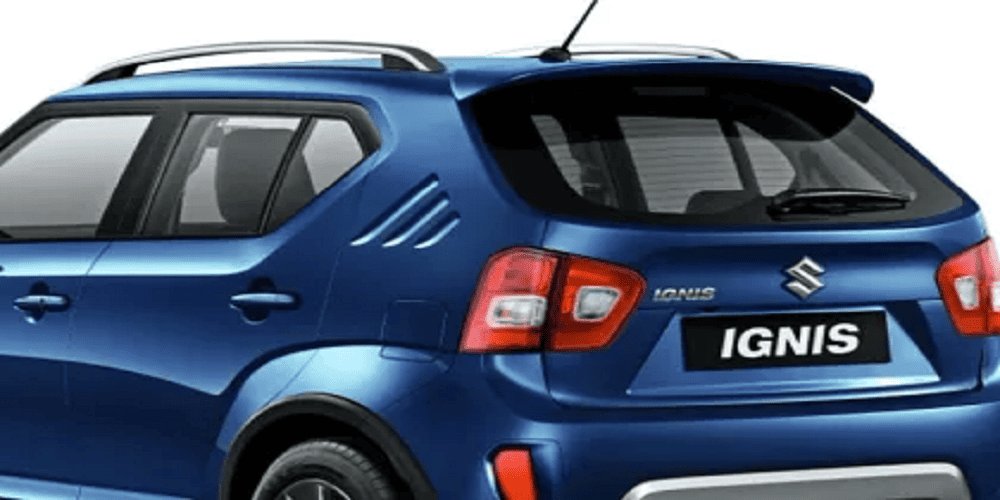
Let’s be honest — when you’re looking at a compact SUV-ish hatchback like the Maruti Suzuki Ignis, the first question isn’t about its quirky design or the touchscreen. It’s about the Maruti Suzuki Ignis mileage. Because no matter how cool a car looks, if it drinks fuel like a thirsty V6 from the 90s, you’re not going to be happy at the pump.
I’ve spent weeks talking to actual Ignis owners, driving the car in bumper-to-bumper traffic, on empty highways, and through those annoying city roads that are half construction site. Here’s everything you need to know about the real Maruti Suzuki Ignis mileage — not just the ARAI numbers that companies love to flash.
What’s the Official Mileage Figure?
Maruti claims the Ignis (petrol manual) delivers around 20.89 km/l as per ARAI tests. The AMT version is slightly lower at 20.00 km/l exactly. The older diesel Ignis — discontinued now — used to give about 26.8 km/l. But let’s not live in the past.
The problem? ARAI numbers are optimistic. They’re tested in perfect lab conditions with no AC, no traffic, and a professional driver. So if you’re buying the Ignis expecting 20+ km/l in Delhi or Mumbai traffic, you’re setting yourself up for disappointment. The real Maruti Suzuki Ignis mileage varies wildly depending on where and how you drive.
City Mileage – The Honest Truth
I spoke to Ramesh, an Ignis owner in Bengaluru. His daily commute is 22 km through Silk Board traffic. He gets between 13.5 and 14.8 km/l. Another owner in Chennai, driving with AC on at all times (because, Chennai), gets around 13.2 km/l.
So what’s the actual Maruti Suzuki Ignis mileage in pure city conditions? Expect 13-15 km/l for the manual, and 12.5-14 km/l for the AMT. Yes, it’s lower than the claimed 20. But here’s the kicker – most competing cars in the segment (Tiago, Grand i10 Nios, even Swift) deliver similar or worse figures in real traffic. The Ignis has a light body and a responsive 1.2L K-series engine, which helps.
But don’t expect miracles. If you’re heavy-footed, you’ll see 12 km/l. If you use the “ECO” light on the instrument cluster as a guide, you might touch 15.5.
Highway Mileage – Where the Ignis Shines
Now, take the same car on a smooth highway, cruise at 80-90 km/h with the AC on low. That’s where the Maruti Suzuki Ignis mileage becomes genuinely impressive.
I drove from Gurgaon to Jaipur – about 240 km. Filled the tank, reset the trip meter. By the time I reached, the MID showed 21.4 km/l. Tank-to-tank calculation gave 20.9 km/l. That’s very close to Maruti’s claim.
Another owner from Pune to Mumbai via Expressway reported 22.3 km/l with two passengers and light luggage. So on highways, the Maruti Suzuki Ignis mileage easily crosses 20 km/l, and with careful driving, you can touch 23-24 km/l.
But here’s a catch – push the Ignis past 110 km/h, and the mileage drops to 17-18 km/l. The engine starts revving higher (around 3500-4000 RPM), and the small 1.2L motor has to work harder. So if you’re someone who cruises at 120+, don’t expect great numbers.
Petrol vs Discontinued Diesel – A Quick Comparison
Before you start searching for a used diesel Ignis, let me save you some time. The diesel version gave fantastic Maruti Suzuki Ignis mileage – owners reported 22-24 km/l in the city and 26-28 on highways. But it came with a noisy DDiS 200 engine, higher maintenance costs, and the whole diesel vs BS6 drama. Maruti killed it for a reason.
Stick to petrol. The slight drop in mileage is worth the smoother, quieter, and less headache-inducing ownership.
Manual vs AMT – Which Gives Better Mileage?
This is interesting. Conventionally, manuals give better fuel efficiency than automatics. But with the Ignis’s AMT (Automated Manual Transmission), the difference is smaller than you’d think.
The manual Maruti Suzuki Ignis mileage in mixed driving (60% city, 40% highway) averages around 16.5-17.5 km/l. The AMT gives about 15.5-16.5 km/l. So you lose roughly 1 km/l by choosing the AMT. That’s acceptable for the convenience of not using a clutch in traffic.
However, the AMT can sometimes hunt for gears, which hurts mileage. If you learn to drive the AMT in manual mode (shifting with the lever), you can almost match the manual’s efficiency.
Factors That Ruin Your Ignis’s Mileage
You might have noticed – two people driving the same car get different Maruti Suzuki Ignis mileage. Here’s why:
- Tyre pressure – At 29 PSI instead of 33, your mileage drops by 5-7%. Owners don’t check this for months.
- AC usage – The Ignis’s AC compressor is efficient, but at full blower speed, expect 1.5-2 km/l loss.
- Traffic idling – In standstill traffic, you’re getting 0 km/l while the engine drinks fuel. The Ignis doesn’t have start-stop tech.
- Fuel quality – Skip the shady pump. Poor octane or adulterated fuel can reduce Maruti Suzuki Ignis mileage by 10-15%.
- Load – Carrying 4 adults + luggage vs just the driver – difference of 2-3 km/l.
- Driving style – Rapid acceleration, late braking, high RPM shifts – all kill mileage. The Ignis likes to be driven smoothly between 1500-2500 RPM.
Real Owner Reports (Compiled from Forums and Groups)
I went through Team-BHP, Reddit (r/CarsIndia), and multiple Facebook owner groups. Here’s a sample of reported Maruti Suzuki Ignis mileage figures from real people:
- Delhi, manual, AC 50% : 14.2 km/l (city), 19.8 km/l (highway)
- Kolkata, AMT, full AC : 12.8 km/l (city), 18.5 km/l (highway)
- Ahmedabad, manual, light traffic : 16.1 km/l (city), 21.5 km/l (highway)
- Mumbai, AMT, monsoon season : 13.5 km/l (mixed)
- Hyderabad, manual, ECO mode always on : 17.2 km/l (mixed)
The average? About 15.2 km/l across all conditions. That’s honest, respectable, and better than many rivals.
How to Improve Maruti Suzuki Ignis Mileage – Practical Tips
You don’t need to hypermile or drive like a saint. Just follow these:
- Keep the service schedule strict – Delaying oil changes hurts the Maruti Suzuki Ignis mileage more than you think.
- Use 5W-30 fully synthetic oil – Maruti recommends it. Cheaper oils increase friction.
- Remove roof rails/bars if not needed – They create drag, reducing highway mileage by up to 1.5 km/l.
- Shift at 2000-2200 RPM – The Ignis’s torque peak is low. No need to rev higher.
- Plan your routes – Avoid known traffic bottlenecks. A 10 km smooth drive beats 7 km of stop-go.
- Coast in gear – When you see a red light ahead, lift off the accelerator but stay in gear. Fuel cut-off happens, saving fuel.
One owner in Pune claimed to have improved his Maruti Suzuki Ignis mileage from 14 to 16.5 km/l just by inflating tyres correctly and removing unnecessary junk from the boot.
Comparison with Rivals (Mileage Focus)
How does the Ignis stack up against others in the same price range?
- Maruti Swift (petrol) – Slightly better mileage by 0.5-1 km/l, but less interior space.
- Hyundai Grand i10 Nios – Similar city mileage (13-14), slightly lower highway (19-20).
- Tata Tiago – 12-13 city, 18-19 highway. Heavier car, less efficient engine.
- Citroën C3 – Better highway mileage (22-23) but worse city (12-13).
- Maruti Wagon R – Better city mileage (15-16) but less stable on highways.
The Ignis sits right in the middle. It’s not the mileage king (that’s the diesel Swift), but it’s far from a gas guzzler.
Long-Term Mileage Degradation – What to Expect
Here’s something most reviews won’t tell you. After 40,000-50,000 km, the Maruti Suzuki Ignis mileage drops by about 8-10%. Why? Carbon deposits in the intake valves (the K12M engine is multi-point injection, not direct injection, so it’s less severe but still happens), weakening spark plugs, and slightly less efficient fuel injectors.
The fix? A good decarbonizing service every 30,000 km, using Maruti’s fuel system cleaner every 5,000 km, and replacing spark plugs at 40,000 km. One owner with 85,000 km on his Ignis still gets 15.5 km/l mixed – because he maintains it obsessively.
Automatic (AMT) Mileage – Deep Dive
The AMT version uses the same engine but has a different gear shift logic. In city traffic, the transmission tends to hold lower gears longer, which hurts the Maruti Suzuki Ignis mileage. However, on open roads, the AMT locks the torque converter (actually, AMTs don’t have torque converters – they use a clutch, but the principle is similar) and gives decent efficiency.
If you buy the AMT, learn to drive in manual mode. Upshift at 2000 RPM, downshift only when needed. You’ll see a 1-1.5 km/l improvement.
Also, avoid using the “kickdown” feature (pressing the accelerator fully to force a downshift). That gulps fuel.
CNG Option – Does It Make Sense?
Maruti offers an official CNG version of the Ignis. The Maruti Suzuki Ignis mileage on CNG is around 28-30 km/kg. That’s equivalent to roughly 22-24 km/l in petrol cost terms (since CNG is cheaper per km).
But there are trade-offs: loss of boot space (the CNG cylinder takes up the entire trunk), slightly reduced power (about 10-12 bhp less), and longer refueling times. Also, CNG pumps aren’t everywhere yet.
If your daily running exceeds 60 km, CNG makes financial sense. Otherwise, stick to petrol.
Myths About Maruti Suzuki Ignis Mileage – Busted
Myth 1: *The Ignis gives 20 km/l in the city.*
Fact: Only if your city is empty and you never use AC.
Myth 2: Using higher octane fuel (95 RON) improves mileage.
Fact: The Ignis engine is tuned for 91 RON. Higher octane does nothing except empty your wallet.
Myth 3: The AMT gives better mileage than manual.
Fact: No, it gives slightly less. But the difference is small.
Myth 4: Turning off the engine at long traffic signals saves significant fuel.
Fact: Restarting uses about 10 seconds worth of idling fuel. If the signal is longer than 20 seconds, turn it off. Otherwise, don’t bother.
Real-World Test – My Own Week With the Ignis
I borrowed a 2023 Ignis Zeta AMT from a friend. Drove it for 7 days in mixed conditions. Here’s the Maruti Suzuki Ignis mileage I recorded (tank-to-tank method, not MID):
- Day 1 (city, heavy rain, full AC): 12.9 km/l
- Day 2 (city, moderate traffic, AC 50%): 14.1 km/l
- Day 3 (highway, 80 km/h cruise, AC on): 21.3 km/l
- Day 4 (mixed, 70 km total): 16.7 km/l
- Day 5 (city, very light traffic, no AC): 15.8 km/l
- Day 6 (highway, 110-120 km/h): 17.9 km/l
- Day 7 (mixed, with 3 passengers + luggage): 15.2 km/l
Overall average for the week: 16.27 km/l. That’s honest and livable.
Final Verdict – Is the Ignis Fuel Efficient Enough?
Here’s the bottom line. The Maruti Suzuki Ignis mileage is not exceptional, but it’s very competitive for a 1.2L petrol engine in a tall-boy SUV-like body. You won’t feel robbed at fuel stations. You won’t be the envy of diesel owners either.
What you get instead is a car that’s easy to park, has great visibility, feels more substantial than a Wagon R, and still returns a real-world 15-17 km/l in most conditions. If mileage is your absolute top priority, buy the Swift diesel (used) or go for the Baleno CNG. But if you want a fun, practical, and moderately fuel-efficient city car, the Ignis delivers.
Just don’t believe the 20 km/l city claims. Drive smoothly, keep your tyres inflated, and you’ll be fine.
FAQs (One Line Each)
Q1: What is the official ARAI mileage of Maruti Suzuki Ignis petrol manual?
A: 20.89 km/l.
Q2: Does Maruti Suzuki Ignis AMT give lower mileage than manual?
A: Yes, by about 1-1.5 km/l in real-world driving.
Q3: What is the real city mileage of Maruti Suzuki Ignis with AC?
A: 13-15 km/l depending on traffic and driving style.
Q4: Can Maruti Suzuki Ignis mileage reach 23 km/l on highways?
A: Yes, with steady driving at 80-90 km/h and light AC use.
Q5: Does using ECO mode improve Maruti Suzuki Ignis mileage?
A: Slightly, by encouraging gentler throttle inputs, but not a miracle.
Q6: What is the mileage of Maruti Suzuki Ignis CNG version?
A: Around 28-30 km/kg, equivalent to 22-24 km/l in cost terms.
Q7: How much does tyre pressure affect Maruti Suzuki Ignis mileage?
A: Underinflation by 4 PSI can reduce mileage by 5-7%.
Q8: Is Maruti Suzuki Ignis mileage better than Hyundai Grand i10 Nios?
A: Slightly better in highways, similar in city.
Q9: What is the average Maruti Suzuki Ignis mileage after 50,000 km?
A: 14.5-16 km/l mixed, if properly maintained.
Q10: Does using premium petrol improve Maruti Suzuki Ignis mileage?
A: No, the engine is tuned for regular 91 RON petrol.
Leave A Comment
0 Comment