
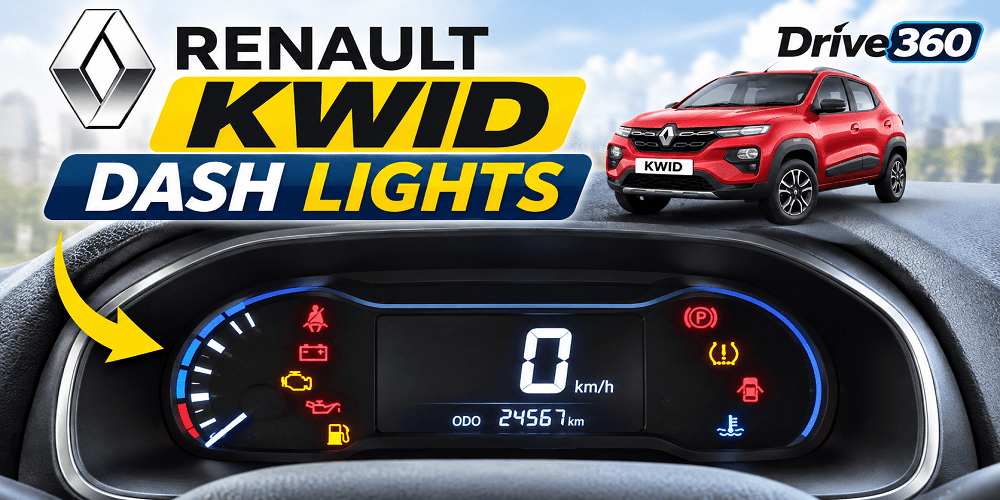
The dashboard of a car provides important information about its condition, performance, and safety. If you own a Renault Kwid, understanding the different dashboard indicators can help you identify potential problems before they become serious. Renault Kwid dash lights are designed to inform drivers about the vehicle's operating status, maintenance requirements, and possible mechanical or electrical issues.
Some dashboard lights are completely normal and appear when you start the engine. Others indicate that a particular system needs attention. For example, a red oil pressure warning light may indicate a serious engine lubrication problem, while an orange engine warning light may indicate an issue with the engine management system.
Whether you drive an older Renault Kwid or a newer model, knowing what these warning symbols mean can make your driving experience safer and more comfortable.
In this guide, we will explain the most common Renault Kwid dashboard warning lights, their meanings, possible causes, and solutions. We will also discuss when you should stop driving and when you can safely visit a service centre.
What Are Renault Kwid Dash Lights?
Renault Kwid dash lights are warning indicators displayed on the instrument cluster behind the steering wheel. These indicators communicate information about different vehicle systems, including the engine, battery, braking system, fuel level, headlights, and safety features.
When you turn on the ignition, several dashboard lights illuminate for a few seconds. This is generally a normal system check. Once the engine starts, most of these indicators should disappear.
However, if a warning light remains illuminated while driving, it may indicate that the vehicle has detected a problem.
Dashboard indicators generally appear in different colours:
Red warning lights: These usually indicate serious problems that require immediate attention. Depending on the warning, you may need to stop the vehicle and switch off the engine.
Orange or yellow warning lights: These indicate a potential problem or malfunction that needs inspection. You should drive carefully and arrange professional assistance.
Green warning lights: These usually indicate that a particular vehicle function is active, such as indicators or headlights.
Blue warning lights: These generally indicate an active function, such as high-beam headlights.
The exact warning symbols and their availability can differ depending on your Renault Kwid model year, equipment, and market.
Common Renault Kwid Dash Lights and Their Meanings
Understanding the different warning indicators can help you respond correctly when something unusual appears on your dashboard.
Here are some of the most common Renault Kwid dash lights that every owner should understand.
1. Engine Check Warning Light
The check engine light is one of the most commonly recognised dashboard warning indicators. It generally appears as an engine-shaped symbol in orange or yellow.
This warning light indicates that the engine management system has detected an issue.
Possible causes include:
- Faulty oxygen sensor.
- Damaged ignition components.
- Fuel system problems.
- Loose electrical connections.
- Faulty sensors.
- Issues with the emission control system.
What should you do?
If the engine warning light stays continuously illuminated and the car feels normal, drive carefully and arrange a diagnostic inspection.
If the light starts flashing, avoid accelerating heavily and reduce engine load. Stop safely if the engine runs roughly, loses power, or behaves abnormally. Contact a qualified mechanic.
A diagnostic scanner can help identify the stored fault code and the actual problem.
2. Battery Warning Light
The battery warning light generally appears as a red battery-shaped symbol.
This indicator is related to the vehicle's charging system. It normally illuminates when you switch on the ignition and should disappear after the engine starts.
If it remains illuminated while driving, the alternator or another part of the charging system may not be working correctly.
Common reasons include:
- Weak or damaged battery.
- Faulty alternator.
- Loose battery terminals.
- Damaged alternator belt.
- Wiring or electrical connection problems.
What should you do?
If the battery warning light appears while driving, switch off unnecessary electrical accessories and find a safe place to stop. Arrange professional inspection rather than continuing your journey.
Remember that a battery warning light does not always mean the battery itself is faulty. The charging system needs to be checked.
3. Engine Oil Pressure Warning Light
The engine oil pressure warning light usually looks like an oil can with a dripping drop.
It is one of the most important Renault Kwid dash lights because engine oil is essential for lubricating moving engine components.
If this red warning light appears while driving, it may indicate insufficient oil pressure.
Possible causes include:
- Low engine oil level.
- Oil leakage.
- Faulty oil pressure sensor.
- Blocked oil filter.
- Oil pump problems.
- Incorrect engine oil.
What should you do?
Stop the vehicle as soon as it is safe and switch off the engine.
Check the engine oil level after parking safely and allowing the engine to settle. If the oil level is low, follow the manufacturer's recommended procedure and oil specification.
If the warning light remains on, do not continue driving. Contact an authorised Renault service centre.
Driving with insufficient oil pressure can cause severe engine damage.
4. Coolant Temperature Warning Light
The coolant temperature warning light indicates that the engine temperature may be too high.
Depending on the vehicle's instrument cluster, a temperature indicator may also appear blue when the engine is cold.
A red temperature warning requires immediate attention.
Common reasons include:
- Low coolant level.
- Coolant leakage.
- Faulty cooling fan.
- Radiator problems.
- Thermostat malfunction.
- Cooling system blockage.
What should you do?
If the temperature warning light turns red, stop safely and follow the vehicle owner's manual.
Switch off the engine if overheating continues. Allow the engine to cool completely before checking the coolant level.
Never open the radiator or coolant reservoir cap while the engine is hot because pressurised coolant can cause serious burns.
If the warning continues after the engine cools down, get professional assistance.
5. Low Fuel Warning Light
The low fuel warning light informs you that the remaining fuel level is getting low.
It usually appears as an orange fuel pump symbol.
When this indicator illuminates, you should plan to visit the nearest petrol station.
Ignoring this warning can leave you stranded, particularly during long journeys or when travelling through areas with limited fuel stations.
What should you do?
Refuel as soon as possible. Do not depend entirely on the estimated remaining driving range because actual fuel consumption depends on traffic, driving style, road conditions, and vehicle load.
It is also a good habit to maintain sufficient fuel before starting a long journey.
6. Handbrake or Parking Brake Warning Light
The parking brake warning light generally appears as a red symbol containing an exclamation mark inside a circle or a similar brake-related indicator.
This light usually illuminates when the handbrake is applied.
However, if it remains illuminated after releasing the handbrake, there may be a problem with the braking system.
Possible causes include:
- Parking brake not fully released.
- Low brake fluid.
- Brake system malfunction.
- Faulty brake warning switch.
What should you do?
First, make sure the handbrake is completely released.
If the warning light remains illuminated, check the brake fluid level according to the owner's manual.
If the warning is accompanied by unusual brake pedal behaviour or reduced braking performance, stop driving and arrange professional assistance.
Never ignore a persistent red brake warning light.
7. ABS Warning Light
ABS stands for Anti-lock Braking System. This system helps prevent the wheels from locking during hard braking.
The ABS warning light generally appears as the letters ABS inside a circle.
If this light stays illuminated after the vehicle starts, it may indicate an ABS system malfunction.
Possible reasons include:
- Faulty wheel speed sensor.
- Damaged ABS wiring.
- ABS control module problems.
- Electrical connection issues.
- Faulty ABS components.
What should you do?
If the ABS warning light remains on, normal braking may still work, but the anti-lock braking function may not be available.
Drive cautiously and maintain a greater distance from other vehicles.
Get the ABS system checked by a qualified technician as soon as possible.
If the red brake warning light also illuminates, stop safely and seek assistance.
8. Airbag Warning Light
The airbag warning light indicates the operational status of the vehicle's airbag or supplementary restraint system.
It usually appears as a person sitting with a circular airbag symbol.
The indicator may illuminate briefly when the ignition is switched on. However, if it remains illuminated, the system may have detected a fault.
Possible causes include:
- Faulty airbag sensor.
- Damaged wiring.
- Loose electrical connections.
- Seatbelt pretensioner problems.
- Airbag control module malfunction.
What should you do?
Arrange an inspection at an authorised service centre.
An airbag system fault can affect the operation of airbags or seatbelt pretensioners during an accident.
Avoid attempting to repair airbag wiring or connectors yourself.
9. Seat Belt Warning Light
The seat belt warning light reminds the driver and passengers to wear their seat belts.
It generally appears as a person wearing a seat belt.
Depending on the vehicle's equipment, the warning may be accompanied by an audible beep.
What should you do?
Wear your seat belt before starting your journey.
Make sure all passengers are properly secured.
If the warning remains on even when the seat belts are fastened, there may be a problem with the seat belt buckle sensor or associated wiring.
10. Headlight and High Beam Indicator
The headlight indicators help drivers understand which lighting functions are active.
Common symbols include:
- Blue indicator for high-beam headlights.
- Green indicator for dipped headlights.
- Green arrows for left and right turn indicators.
- Fog lamp indicator on suitably equipped versions.
These are generally informational indicators rather than fault warnings.
What should you do?
Use dipped headlights when driving in normal night-time traffic.
Use high beams only when appropriate and avoid dazzling oncoming drivers.
If the headlight indicators behave unusually, inspect the lighting controls, bulbs, and electrical connections.
11. Exhaust Gas Monitoring Warning Light
The exhaust gas monitoring warning light indicates a possible issue with the vehicle's emission control system.
This system helps control harmful emissions produced by the engine.
Possible causes include:
- Faulty oxygen sensor.
- Fuel mixture problems.
- Ignition system issues.
- Exhaust system malfunction.
- Emission control component failure.
What should you do?
If the warning light remains illuminated, arrange a diagnostic check.
If it flashes, reduce engine speed and avoid unnecessary acceleration. Contact an authorised dealer or qualified technician as soon as possible.
Do not ignore repeated emission-related warnings because an unresolved problem may affect engine performance and fuel efficiency.
12. Gear Shift Indicator
The gear shift indicator provides suggestions about when to change gears for better fuel efficiency.
It may display an upward or downward arrow.
An upward arrow generally suggests changing to a higher gear, while a downward arrow suggests selecting a lower gear.
This is a driving assistance feature rather than a mechanical fault warning.
What should you do?
Follow the recommended gear changes when road conditions allow.
However, always prioritise vehicle control and safe driving over the indicator's suggestions.
Understanding Red, Orange, Green and Blue Dashboard Lights
One of the easiest ways to understand Renault Kwid dash lights is to recognise their colours.
Red Dashboard Lights
Red indicators generally represent serious warnings that require immediate attention.
Examples include:
- Engine oil pressure warning.
- Brake system warning.
- Engine overheating warning.
- Battery charging system warning.
- Serious engine malfunction warning.
If a red warning light appears while driving, stop safely and check the owner's manual for the correct action. Some red warnings require the engine to be switched off immediately.
Orange or Yellow Dashboard Lights
Orange and yellow indicators usually indicate a malfunction or a system that needs attention.
Examples include:
- Check engine light.
- ABS warning light.
- Airbag warning light.
- Exhaust gas monitoring warning.
- Electronic stability control warning, where equipped.
These warnings should not be ignored. Follow the instructions in your owner's manual and arrange an inspection.
Green Dashboard Lights
Green indicators generally show that a vehicle function is active.
Examples include:
- Turn indicators.
- Dipped headlights.
- Certain driving assistance functions.
These indicators usually do not indicate a mechanical problem.
Blue Dashboard Lights
Blue indicators commonly show that high-beam headlights are switched on.
Make sure to use high beams responsibly, particularly when other vehicles are approaching.
Why Do Renault Kwid Dash Lights Turn On?
There are several reasons why dashboard warning lights may illuminate.
Understanding the possible causes can help you decide what action to take.
1. Electrical Problems
A weak battery, damaged wiring, loose connectors, or charging system problems can trigger warning indicators.
2. Sensor Malfunction
Modern vehicles use sensors to monitor engine performance, temperature, braking systems, and other components. A faulty sensor may cause an incorrect warning.
3. Low Fluid Levels
Low engine oil or brake fluid can trigger important warning indicators.
4. Engine Management Problems
Problems with fuel delivery, ignition components, or emission control systems can activate the check engine light.
5. Maintenance Requirements
Some indicators are related to scheduled maintenance. Regular servicing helps keep the vehicle in good operating condition.
6. Component Wear and Damage
Over time, mechanical and electrical components can wear out. Regular inspections can help identify problems before they become serious.
What Should You Do When Renault Kwid Dashboard Lights Appear?
If you notice an unfamiliar warning light, avoid panicking. Follow these practical steps.
Step 1: Identify the Warning Symbol
Look carefully at the dashboard and identify the illuminated symbol. Check your Renault Kwid owner's manual to understand its exact meaning.
Step 2: Check the Warning Colour
Determine whether the indicator is red, orange, green, or blue. This helps you understand whether it is a serious warning or a normal operating indicator.
Step 3: Observe Vehicle Performance
Check whether the car is experiencing unusual noises, overheating, reduced acceleration, vibration, or braking problems.
Step 4: Stop If Necessary
If a serious red warning appears, stop in a safe location as soon as traffic conditions allow. Switch off the engine when instructed by the owner's manual.
Step 5: Visit a Service Centre
If the warning remains illuminated, arrange a professional inspection. A diagnostic scanner can help identify electronic faults and stored error codes.
Step 6: Avoid Unnecessary Repairs
Do not replace sensors or other components without confirming the actual problem. Proper diagnosis can prevent unnecessary expenses.
How to Prevent Dashboard Warning Lights in Renault Kwid
Although some warning lights appear because of unexpected faults, regular maintenance can reduce the possibility of common vehicle problems.
Here are some useful maintenance tips for Renault Kwid owners.
Check Engine Oil Regularly
Maintain the correct engine oil level and follow the manufacturer's recommended oil specifications and replacement intervals.
Inspect the Battery
Check battery terminals for corrosion and make sure electrical connections are secure.
Maintain Coolant Levels
Inspect the coolant reservoir when the engine is completely cold. Check for leaks and follow the recommended coolant specifications.
Check Brake Components
Inspect brake fluid levels, brake pads, and other braking components during scheduled servicing.
Follow the Service Schedule
Regular maintenance helps identify problems with sensors, electrical connections, engine components, and other systems.
Pay Attention to Warning Indicators
Never ignore a warning light simply because the vehicle appears to be running normally.
Where Can You Find the Renault Kwid Dashboard Warning Light Manual?
The best source for identifying your vehicle's dashboard symbols is the official Renault Kwid owner's manual.
Renault provides model-year-specific owner's manuals through its official website. You can select your vehicle and download the appropriate document.
Visit the official Renault India owner's manual page:
You can also refer to the 2025 Kwid owner's manual for detailed information about dashboard indicators and their operation.
Always check the manual corresponding to your vehicle's manufacturing year because dashboard symbols and equipment can differ between versions.
Conclusion
Understanding Renault Kwid dash lights is important for every vehicle owner. These indicators help you monitor the condition of your car and identify potential issues before they become expensive repairs.
From the check engine and battery warning lights to the oil pressure, ABS, and coolant temperature indicators, each symbol provides useful information about a particular vehicle system.
Remember that red warning lights generally require immediate attention, while orange indicators should be investigated as soon as possible. Green and blue indicators usually communicate that specific vehicle functions are active.
Regular servicing, checking fluid levels, maintaining the battery, and following the manufacturer's maintenance schedule can help keep your Renault Kwid in good condition.
If a warning light remains illuminated or appears alongside unusual vehicle behaviour, consult an authorised Renault service centre rather than ignoring the problem.
Frequently Asked Questions (FAQs)
1. What are the most common Renault Kwid dash lights?
Some common Renault Kwid dashboard indicators include the check engine light, battery warning light, oil pressure warning light, coolant temperature warning light, ABS warning light, low fuel indicator, and seat belt warning light. Each indicator provides information about a specific vehicle system.
2. What does an orange engine light mean in Renault Kwid?
An orange engine warning light generally indicates that the engine management system has detected a fault. Possible reasons include sensor problems, ignition issues, fuel system faults, or emission control problems. Get the vehicle diagnosed if the light remains illuminated.
3. Can I drive my Renault Kwid with a red dashboard warning light?
It depends on the warning symbol. Red oil pressure, overheating, and serious brake warnings can indicate dangerous conditions. Stop safely and follow the owner's manual instructions. Some warnings require switching off the engine immediately.
4. Why do dashboard lights turn on when starting a Renault Kwid?
Dashboard indicators normally illuminate briefly when you switch on the ignition. This is part of the vehicle's instrument panel system check. Most warning lights should disappear after the engine starts. If a warning remains illuminated, investigate its meaning.
5. How can I reset Renault Kwid dashboard warning lights?
The correct way to reset a warning light depends on the underlying issue. Some indicators disappear automatically when the relevant function is switched off or the problem is resolved. However, fault-related warnings may require professional diagnosis and repair. Avoid simply disconnecting the battery or clearing error codes without identifying the cause.
Leave A Comment
0 Comment