
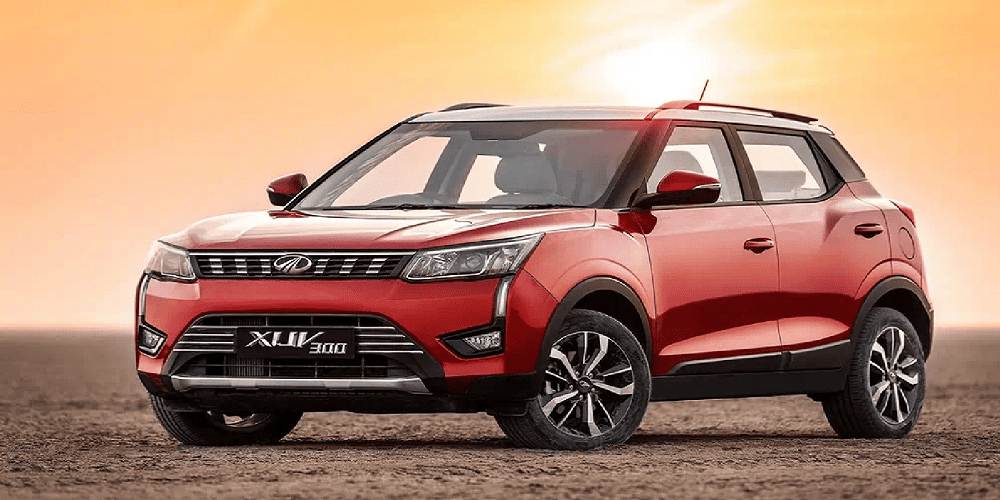
Buying a compact SUV today involves weighing a host of factors—initial price, fuel type, running costs, resale potential and more. Among these factors, fuel type has gained importance: many buyers now consider factory-fitted CNG versions or retrofit options because of the lower running cost per kilometre. When you ask about the Mahindra XUV300 CNG Price, you must first recognise whether a factory-CNG version exists, what the pricing landscape is, and what trade-offs are involved.
Does a factory CNG version of the XUV300 exist?
In the case of the Mahindra XUV300, official sources indicate that there is no factory-installed CNG variant currently listed. According to a FAQ compiling fuel-type availability, the XUV300 is offered only in petrol and diesel fuel types. (91Wheels)
However, some media outlets have previously reported a “CNG” listing or mention of a CNG option for XUV300. For example, one article by the The Financial Express listed a “Mahindra XUV300 1.2 Sportz CNG” at ? 7.16 lakh (ex-showroom Delhi). (The Financial Express)
Given the conflicting signals, it suggests that if a CNG version exists, it may either be a dealer-fitted retrofit or a very limited variant, not part of the primary factory line-up.
Therefore, our discussion on Mahindra XUV300 CNG Price will need to note this qualification up front.
What price reference exists for the XUV300 and what about a CNG version?
For the standard petrol/diesel versions of the XUV300, the ex-showroom price range in India is reported as roughly ? 8.41 lakh to ? 14.07 lakh (Delhi) for regular variants. (ETAuto.com)
In Pune, on-road prices for the model ranged from about ? 9.8 lakh to ? 17.9 lakh for petrol/diesel variants. (ACKO Drive)
Turning to CNG, the Financial Express piece suggests the variant at ? 7.16 lakh (ex-showroom Delhi) for the 1.2 Sportz CNG listing. (The Financial Express) But this number seems unusual given general factory listing data and may possibly be speculative, outdated or indicative of a special offering.
In short: genuine factory-CNG pricing for the XUV300 is not clearly established in public listings. If you are referencing Mahindra XUV300 CNG Price, the important caveat is that the model may not officially offer a CNG variant in every region or may rely on aftermarket conversion.
Why does the discrepancy between listing data matter?
From a consumer standpoint the discrepancy and uncertainty around a CNG version matter for several reasons:
- Fuel cost savings vs. incremental cost: A CNG version may offer lower running cost (per km) compared to petrol/diesel—but if the variant is not factory-fitted, warranty, performance and resale value may be impacted.
- Residual value: SUVs that are widely offered in officially certified CNG versions tend to have better resale value support. If the XUV300 CNG is a retrofit or limited, buyers may face uncertainty.
- Availability & service network: CNG variants require specific service infrastructure. If the manufacturer does not promote the variant, you may face problems with spares or certification.
- Actual pricing and taxation: Ex-showroom price is only part of the story. On-road cost (registration, local tax, insurance etc.) may be higher; a CNG conversion or variant may add cost.
Because of the limited clarity on the “CNG” variant of the XUV300, when you consider the Mahindra XUV300 CNG Price, it is wise to treat the headline number with caution and dig deeper at your local dealership.
Understanding the value equation: Why consider CNG and what to check
If you are evaluating the XUV300 with a view to CNG (or comparing it with petrol/diesel versions) here are some key points:
- Running cost: CNG is typically cheaper per km than petrol, so for a high-usage driver (city+highway) the fuel savings may offset a higher upfront cost over time.
- Performance trade-offs: CNG versions sometimes have a slightly lower power/torque due to the fuel system; also the additional CNG storage tank may reduce boot space or add weight.
- Upfront cost and availability: Factory-CNG versions typically cost more than the equivalent petrol variant; aftermarket conversions may appear cheaper but carry some risk.
- Warranty and resale: A manufacturer-approved CNG variant would normally ensure full warranty coverage; if the XUV300 is not officially CNG, you might lose some benefit or face reduced resale value.
- Local infrastructure: The presence of good CNG refuelling network in your city/state is key. While many metros have this, coverage varies.
- Certification and compliance: In India, CNG versions must meet certain regulatory standards (e.g., for piping, tanks, locking). A factory variant is safer in this respect.
So, what should you quote as the “Mahindra XUV300 CNG Price”?
Given the above, here is a practical way to view it:
- If the vehicle you are quoting is not a factory-certified CNG version, then the “CNG price” is not officially published and is likely subject to dealer variation or conversion cost.
- If we take the ? 7.16 lakh figure (ex-showroom Delhi) from the Financial Express as an indicative number for a “CNG” mention, then you might use that as a ball-park—but with a strong caveat. (The Financial Express)
- For standard petrol/diesel versions, use the more widely published ranges (? 8-14 lakh ex-showroom north India) and include that a proper CNG option may require additional cost or may not be available.
- Always check the “on-road” price in your city (includes RTO, insurance, state taxes) because that is what you will actually pay.
Example scenario: Your total cost and savings calculation
Suppose you locate an XUV300 variant and you ask the dealer about a “CNG” version. The key questions could be:
- What is the ex-showroom price of the XUV300 variant in your city?
- If it’s a factory CNG version: how much extra over the petrol version?
- If it’s a retrofit conversion: what is the cost of conversion, who does it, how does it affect warranty?
- What is expected km per day/year, and what fuel savings do you get (petrol vs CNG)?
- How does boot space/performance differ (if at all) in the CNG version?
- What is resale value expected to be after, say, 3 years?
So, let’s plug in an illustrative example. Suppose the petrol XUV300 variant in your city is ? 10 lakh ex-showroom. If the CNG version were to cost ? 75,000 extra, then your ex-showroom price becomes ? 10.75 lakh. If your usage is high (say 20,000 km per year) and you switch from petrol to CNG saving ? 5 per km (just assumption), you may save ? 1 lakh per year. In that case you recoup the extra cost in under a year. But if your usage is only 8,000 km/year then the pay-back may stretch to 3-4 years. Always do the math.
Keep in mind: Segment, competition and context
While you focus on the Mahindra XUV300 CNG Price, remember that this model competes in the sub-4-metre compact SUV segment (when relevant) with rivals such as the Tata Nexon and the Maruti Suzuki Brezza. For many of those rivals, CNG options may already be widely available (e.g., in the Brezza/Ciaz segment) which affects comparative value. In that competitive context, buyers may ask whether the SUV offers a CNG option at all and if so, whether the price and features stack up favourably.
Since the XUV300 listing shows no strong factory CNG focus (per 91Wheels’ FAQ) (91Wheels) you may find that buyers either stick with petrol/diesel versions or opt for aftermarket conversion—but then one has to accept possible compromises.
Should you wait/consider alternatives?
Given the uncertainty around a factory CNG variant of the XUV300, you might consider the following approaches:
- Visit the nearest authorised dealer of Mahindra and ask: is there a factory- CNG version of the XUV300 in the dealer’s current inventory in your state? If yes, get the detailed variant specification and pricing sheet.
- Compare the incremental cost of CNG vs. petrol and estimate your pay-back based on daily usage, kilometre target and fuel price difference.
- Look at alternatives in the segment with verified factory CNG versions. If CNG is a priority for you, a model with official CNG offering may ensure better warranty/support/ resale value.
- If you are comfortable converting a petrol XUV300 to CNG aftermarket, check the certified conversion partner, what warranty they provide, and how resale may be impacted.
Final thoughts on “Mahindra XUV300 CNG Price”
In summary: when you talk about the Mahindra XUV300 CNG Price, you must clarify that the XUV300 does not have a widely publicised factory-CNG variant (as of current known listings) and that the price figure you may find (such as ? 7.16 lakh ex-showroom for a claimed “1.2 Sportz CNG” variant) should be treated with caution and verified locally.
Most buyers of the XUV300 in India currently pick petrol or diesel versions, with ex-showroom pricing in the region of ? 8.41 lakh to ? 14.07 lakh. (ETAuto.com) If you are specifically seeking a CNG variant, you must check availability in your state, incremental cost, certification, warranty and how much usage you intend to get from it for the fuel cost savings to make sense.
I would recommend: when drafting your purchase decision or blog piece, clearly state the Mahindra XUV300 CNG Price outlook as “… not officially listed in most markets; indicative ex-showroom figure around ? 7.16 lakh (Delhi) but subject to local availability and verification.” Then discuss the petrol/diesel baseline pricing and what a CNG conversion would imply.
Leave A Comment
0 Comment