
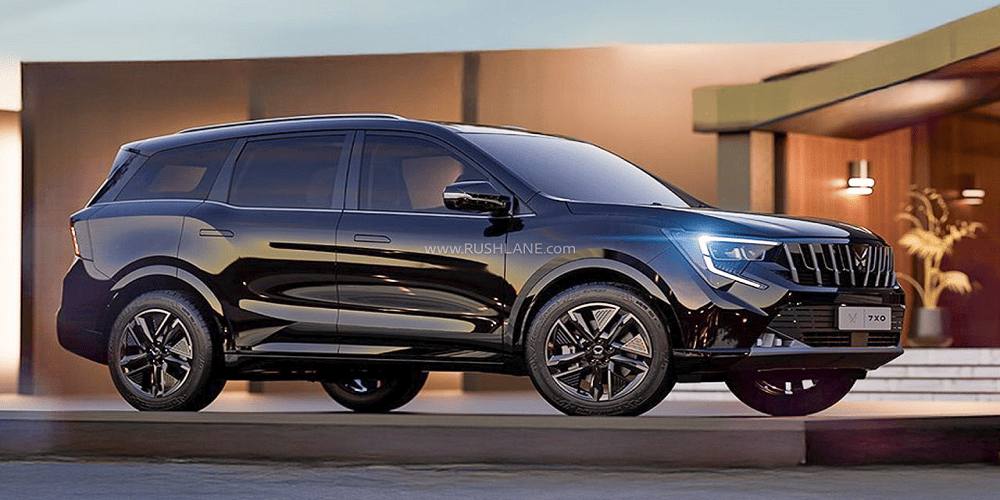
The Indian automotive landscape is on the cusp of a revolutionary shift, and at the very heart of this transformation stands Mahindra & Mahindra. Known for its rugged utility vehicles and increasingly sophisticated SUVs, Mahindra has been steadily building an electric arsenal under its ambitious XUV and XEV sub-brands. Among the most anticipated models in the pipeline is the configuration often referred to as the Mahindra XUV 7XO XEV 9S. While Mahindra has officially trademarked names like XUV700, XUV.e9, and the all-electric XEV 9e, the buzzword “Mahindra XUV 7XO XEV 9S” has surfaced in automotive forums, speculation columns, and enthusiast discussions. This article compiles everything you need to know about this speculated fusion of design, technology, and performance, along with detailed frequently asked questions.
The name Mahindra XUV 7XO XEV 9S, though unofficial, hints at a potent combination. The “XUV” lineage represents Mahindra’s successful ICE (Internal Combustion Engine) and hybrid-capable platforms, while “XEV” denotes the pure-electric Born Electric Platform developed in collaboration with Volkswagen’s MEB components. The “7XO” suggests a potential seven-seater configuration with enhanced off-road capability, and “9S” indicates premium positioning, sports performance, and a likely long-range battery pack. This vehicle, if launched as speculated, will directly rival the Tata Harrier EV, Maruti Suzuki eVX, and Hyundai Ioniq 5.
Mahindra XUV 7XO XEV 9S is expected to be a coupe-styled electric SUV that blends the muscular stance of the XUV700 with the futuristic silhouette of the XUV.e9 concept. The production version could retain the split-headlamp design, closed-off grille, and C-shaped LED daytime running lights that have become hallmarks of Mahindra’s new design language. Inside, the Mahindra XUV 7XO XEV 9S might feature a triple-screen layout—a digital instrument cluster, an infotainment touchscreen, and a passenger-side entertainment display—all running on the new MAIA (Mahindra Artificial Intelligence Architecture) software stack. This would be complemented by a two-spoke steering wheel with an illuminated logo, adaptive ambient lighting, and premium leatherette upholstery.
Under the skin, the Mahindra XUV 7XO XEV 9S will likely sit on the INGLO (Integral Lightweight Globally Optimized) platform, which supports wheelbases between 2.65 meters and 2.9 meters. This skateboard architecture accommodates battery packs ranging from 60 kWh to 80 kWh, enabling a claimed range of 450 to 550 kilometers on a single charge. Mahindra’s collaboration with Volkswagen means the Mahindra XUV 7XO XEV 9S could use the German supplier’s unified prismatic cell technology for better thermal management and energy density. Power output is rumored to be between 200 bhp and 250 bhp for the single-motor rear-wheel-drive version, with a dual-motor all-wheel-drive variant producing over 300 bhp.
Charging capability is where the Mahindra XUV 7XO XEV 9S could shine. Expect support for 150 kW DC fast charging, which would add up to 80 percent charge in under 30 minutes. On an 11 kW AC home charger, the vehicle might fully recharge overnight. Vehicle-to-load (V2L) and vehicle-to-vehicle (V2V) charging are also likely, turning the Mahindra XUV 7XO XEV 9S into a mobile power bank for gadgets or even another EV in an emergency.
From a pricing perspective, the Mahindra XUV 7XO XEV 9S will likely slot above the XUV400 (which starts around ₹15.99 lakh, ex-showroom) but below the more premium XUV.e8 or XUV.e9 flagship. Analysts predict a base variant of the Mahindra XUV 7XO XEV 9S could be priced between Rs 22 lakh to Rs 26 lakh, while the top-spec dual-motor AWD version might touch Rs 32 lakh. This aggressive pricing would undercut the Hyundai Ioniq 5 while offering more interior space and local manufacturing advantages.
Safety is non-negotiable for Mahindra. The Mahindra XUV 7XO XEV 9S is expected to achieve a five-star Global NCAP rating, leveraging a high-strength steel cage, six airbags as standard, electronic stability control, hill descent control, and a 360-degree camera. Advanced driver-assistance systems (ADAS) would include adaptive cruise control, lane-keep assist, autonomous emergency braking, and blind-spot monitoring. Level 2 ADAS might be standard from the mid-spec trim upward.
The launch timeline for the Mahindra XUV 7XO XEV 9S remains speculative but grounded. Mahindra has confirmed that its first batch of born-electric SUVs—the XUV.e8 and XEV 9e—will debut in late 2024 with deliveries starting in early 2025. The XUV 7XO XEV 9S, if it is a derivative or a distinct variant, could arrive by mid-2025 or early 2026. Mahindra has invested heavily in its Pune-based battery assembly line and the upcoming manufacturing facility in Chakan, which will produce these EVs.
One of the most compelling aspects of the Mahindra XUV 7XO XEV 9S is its potential for a seven-seat configuration. Current electric SUVs in India rarely offer a genuine third row. The XUV700 ICE version has a popular 7-seat option, so carrying that DNA into the XEV platform makes perfect sense. The Mahindra XUV 7XO XEV 9S could feature a 2+3+2 layout with the middle row sliding forward for easy third-row access. However, the battery pack under the floor might raise the floor height slightly, so third-row knee room could be best suited for children or shorter adults.
In terms of driving modes, the Mahindra XUV 7XO XEV 9S will likely offer Eco, City, Sport, and possibly a Snow or Off-Road mode for AWD variants. Regenerative braking will have multiple levels, including a one-pedal driving mode for city traffic. The steering and suspension tuning would be customized to Indian road conditions, balancing comfort and stability.
When we compare the Mahindra XUV 7XO XEV 9S against key competitors, several differentiators emerge. The Tata Harrier EV, built on the Acti.ev platform, is expected around the same time but may offer lower power output. The Maruti Suzuki eVX, a Toyota co-developed product, will have a similar range but a more conventional design. The Mahindra XUV 7XO XEV 9S counters with aggressive styling, a wider touchscreen ecosystem, and stronger powertrain options. Only the BYD Atto 3 comes close in features, but the Mahindra’s local service network gives it an edge.
From a maintenance standpoint, the Mahindra XUV 7XO XEV 9S will have lower running costs than any diesel or petrol XUV700. With electricity priced at Rs 8-12 per unit at public chargers or Rs 5-7 for home charging, the cost per kilometer would be under Re 1, compared to Rs 7-9 per km for the diesel version. There are no oil changes, air filters, or clutch replacements, though battery health monitoring and coolant checks for the thermal management system become important.
Mahindra is also investing heavily in its dealership electrification program. By the time the Mahindra XUV 7XO XEV 9S launches, over 200 Mahindra dealerships in top 100 cities will have dedicated EV service bays, trained technicians, and at least two DC fast chargers. This reduces range anxiety and service uncertainty for first-time EV buyers.
One must address the “XEV 9S” part of the name. The “9S” could denote a sports derivative with lowered suspension, larger wheels, stiffer anti-roll bars, and perhaps a sportier exterior with carbon-fiber-like accents and red brake calipers. This would be Mahindra’s answer to the Volkswagen ID.4 GTX or the Ford Mustang Mach-E GT. The “S” could also imply an extended range battery with higher energy density, pushing real-world range beyond 500 kilometers.
Regarding charging infrastructure, the Mahindra XUV 7XO XEV 9S will support CCS2 charging, which is the standard across all public DC fast chargers in India from BPCL, Tata Power, Jio-bp, and Statiq. Additionally, Mahindra might offer a partnership with a charge point operator (CPO) to provide free charging for the first year or 10,000 kilometers, similar to what Hyundai offered for the Ioniq 5.
The vehicle’s software will be updatable over-the-air (OTA). That means the Mahindra XUV 7XO XEV 9S could receive new features, improved battery algorithms, and even interface redesigns without visiting a service center. This is a significant shift from Mahindra’s traditional approach and aligns the brand with Tesla and Chinese EV makers.
Another unique selling proposition could be the inclusion of a heat pump as standard in the Mahindra XUV 7XO XEV 9S. A heat pump is more efficient than resistive electric heating for cabin warming, increasing winter range by up to 20 percent. For northern Indian buyers dealing with sub-10-degree Celsius temperatures, this is a critical advantage.
The interior roof might feature a panoramic sunroof, not just for ventilation but for a sense of spaciousness in the third row. The Mahindra XUV 7XO XEV 9S could also offer cooled seats for the first and second rows, a powered tailgate, and a 15-speaker Sony or Harman audio system. Ambient lighting with 64 colors would sync with the drive mode: green for Eco, blue for City, and red for Sport.
In terms of wheel size, expect 18-inch alloys as standard and 19-inch or even 20-inch options on higher trims. The tires would be low-rolling-resistance (LRR) to maximize range. The ground clearance might be around 190 mm to protect the battery while maintaining aerodynamic efficiency.
Mahindra has filed multiple design patents globally for the XUV.e and XEV series. The Mahindra XUV 7XO XEV 9S is likely one of those code-named internally as S203 or S208. The company has also confirmed a dedicated electric SUV architecture that can spawn body styles including coupe SUV, conventional SUV, and even a sedan. This versatility means the 7XO could be a more upright, three-row version of the XUV.e9 coupe.
Let’s talk about battery warranty. Mahindra will probably offer an 8-year or 1,60,000 km warranty on the battery pack, whichever comes first. This covers excessive degradation beyond 70% state of health. The Mahindra XUV 7XO XEV 9S will also include roadside assistance that includes flatbed towing to the nearest fast charger if the vehicle runs out of charge.
Now, why might a buyer choose the Mahindra XUV 7XO XEV 9S over a similarly priced petrol car like the Toyota Fortuner or MG Gloster? The answer is total cost of ownership. With lower fuel costs, zero road tax in many states, reduced maintenance, and significant savings on registration fees, the Mahindra XUV 7XO XEV 9S could pay back its premium within three to four years of average ownership.
Environmental consciousness is another driver. Manufacturing a single Mahindra XUV 7XO XEV 9S still produces carbon emissions, but over a lifetime of 1.5 lakh kilometers, it emits roughly half the CO2 of a comparable diesel SUV, even accounting for India’s coal-heavy electricity grid.
Potential buyers should also consider home charging setup. The Mahindra XUV 7XO XEV 9S will come with a 3.3 kW portable charger, but a 7.2 kW wall box is recommended. Mahindra’s dealer network will likely offer installation services through certified electricians for an additional fee. Apartment dwellers without dedicated parking should assess charging feasibility before booking.
The infotainment system in the Mahindra XUV 7XO XEV 9S will run on Android Automotive OS, not to be confused with Android Auto. This means native apps like Google Maps, Spotify, and YouTube can run without a phone. Over-the-air updates can add new apps and features. The system will also support wireless Android Auto and Apple CarPlay.
Another feature on the cards is a front trunk, or frunk, due to the absence of an internal combustion engine. The Mahindra XUV 7XO XEV 9S could have a 55-liter frunk, perfect for storing the charging cables or a small bag, reducing the need to open the main tailgate frequently.
What about resale value? This is uncertain for any new EV in India. However, Mahindra’s strong brand trust, the popularity of the XUV badge, and the growing acceptance of EVs suggest the Mahindra XUV 7XO XEV 9S could retain 50-55 percent of its value after three years, similar to diesel automatic SUVs today.
Finally, let’s consider the driving experience. The Mahindra XUV 7XO XEV 9S will offer instant torque, silent operation, and a low center of gravity due to the floor-mounted battery. This translates to flat cornering and minimal body roll despite the SUV height. The electric powertrain also allows for a tighter turning radius because there’s no large engine block limiting wheel articulation.
Frequently Asked Questions about Mahindra XUV 7XO XEV 9S
- Is the Mahindra XUV 7XO XEV 9S an officially announced model?
No, as of early 2025, Mahindra has not officially announced any model named Mahindra XUV 7XO XEV 9S. The name is a combination of speculation from automotive enthusiasts and media. Mahindra has confirmed the XUV.e8, XUV.e9, and XEV 9e. The Mahindra XUV 7XO XEV 9S likely refers to a future seven-seat electric SUV derivative based on the INGLO platform. - What will be the real-world driving range of the Mahindra XUV 7XO XEV 9S?
Based on the expected 70 kWh to 80 kWh battery pack, the Mahindra XUV 7XO XEV 9S could deliver a real-world range of 450 to 500 kilometers in mixed city and highway driving. The bespoke aerodynamic design and low rolling resistance tires would help achieve these figures. In Eco mode with regenerative braking on high, you might see up to 520 kilometers. - How much will the Mahindra XUV 7XO XEV 9S cost in India?
Pricing is speculative but likely to be between Rs 22 lakh and Rs 32 lakh (ex-showroom). The base rear-wheel-drive variant with a smaller battery could start around Rs 22 lakh, while the fully loaded all-wheel-drive version with the larger battery and all ADAS features might exceed Rs 30 lakh. These prices would be before state EV subsidies and road tax exemptions. - Will the Mahindra XUV 7XO XEV 9S have a seven-seat configuration?
Yes, the “7XO” in the keyword strongly suggests a seven-seat layout. Mahindra has experience with the XUV700 seven-seater, so translating that into the electric INGLO platform is entirely feasible. However, the third row will be best suited for children or occasional adult use because the battery pack raises the floor height slightly. - What is the expected launch date for the Mahindra XUV 7XO XEV 9S?
If Mahindra decides to produce this model, the earliest possible launch would be late 2025, with deliveries starting in early 2026. The company’s current priority includes launching the XUV.e8 and XEV 9e in late 2024 and early 2025. The Mahindra XUV 7XO XEV 9S would be a subsequent model, possibly unveiled at the 2026 Auto Expo. - Does the Mahindra XUV 7XO XEV 9S support fast charging?
Yes, like all Mahindra INGLO platform EVs, the Mahindra XUV 7XO XEV 9S will support 150 kW DC fast charging. This means a 10-80 percent charge can be completed in approximately 30 minutes on a compatible public charger. On a standard 7.2 kW AC home wall box, a full charge would take 8 to 10 hours. - What are the main competitors of the Mahindra XUV 7XO XEV 9S?
The primary rivals will be the Tata Harrier EV, Maruti Suzuki eVX, Hyundai Ioniq 5 (if price overlaps), BYD Atto 3, and the upcoming Volkswagen ID.4 for India. The Mahindra XUV 7XO XEV 9S competes on interior space, local service network, and aggressive pricing. - Will the Mahindra XUV 7XO XEV 9S get ADAS and a five-star safety rating?
Very likely. Mahindra targets a five-star Global NCAP rating for all its new EVs. The Mahindra XUV 7XO XEV 9S will feature at least six airbags, ESC, and Level 2 ADAS including adaptive cruise control, lane centering, and autonomous emergency braking. A 360-degree camera and front parking sensors will be included from the mid-spec variant. - Can I charge the Mahindra XUV 7XO XEV 9S at home with a regular socket?
Yes, Mahindra will include a 3.3 kW portable charging cable that can plug into a 15-ampere household socket. This adds approximately 15 kilometers of range per hour of charging. For overnight full charging, a dedicated 7.2 kW wall-mounted AC charger is highly recommended and can be professionally installed. - What is the waiting period expected for the Mahindra XUV 7XO XEV 9S?
Given Mahindra’s history of strong demand for XUV700 and the growing interest in EVs, the Mahindra XUV 7XO XEV 9S could have a waiting period of 3 to 8 months after launch, depending on variant and location. Battery production capacity will be the main constraint. Early bookings from existing Mahindra customers may be prioritized.
Leave A Comment
0 Comment